The Story in Brief

“What’s becoming clear is that retention is no longer a reliable signal of engagement. Many organizations are seeing strong intent to stay alongside declining energy, lower advancement interest, and uneven engagement across teams. The ‘Great Stay’ may reflect caution more than commitment, which makes it critical for leaders to look beyond retention when assessing workforce health.”
Picking Up the Story
Stability is Masking Low Engagement
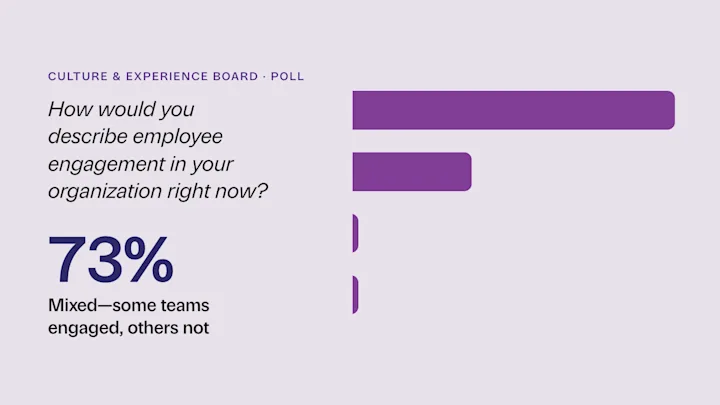
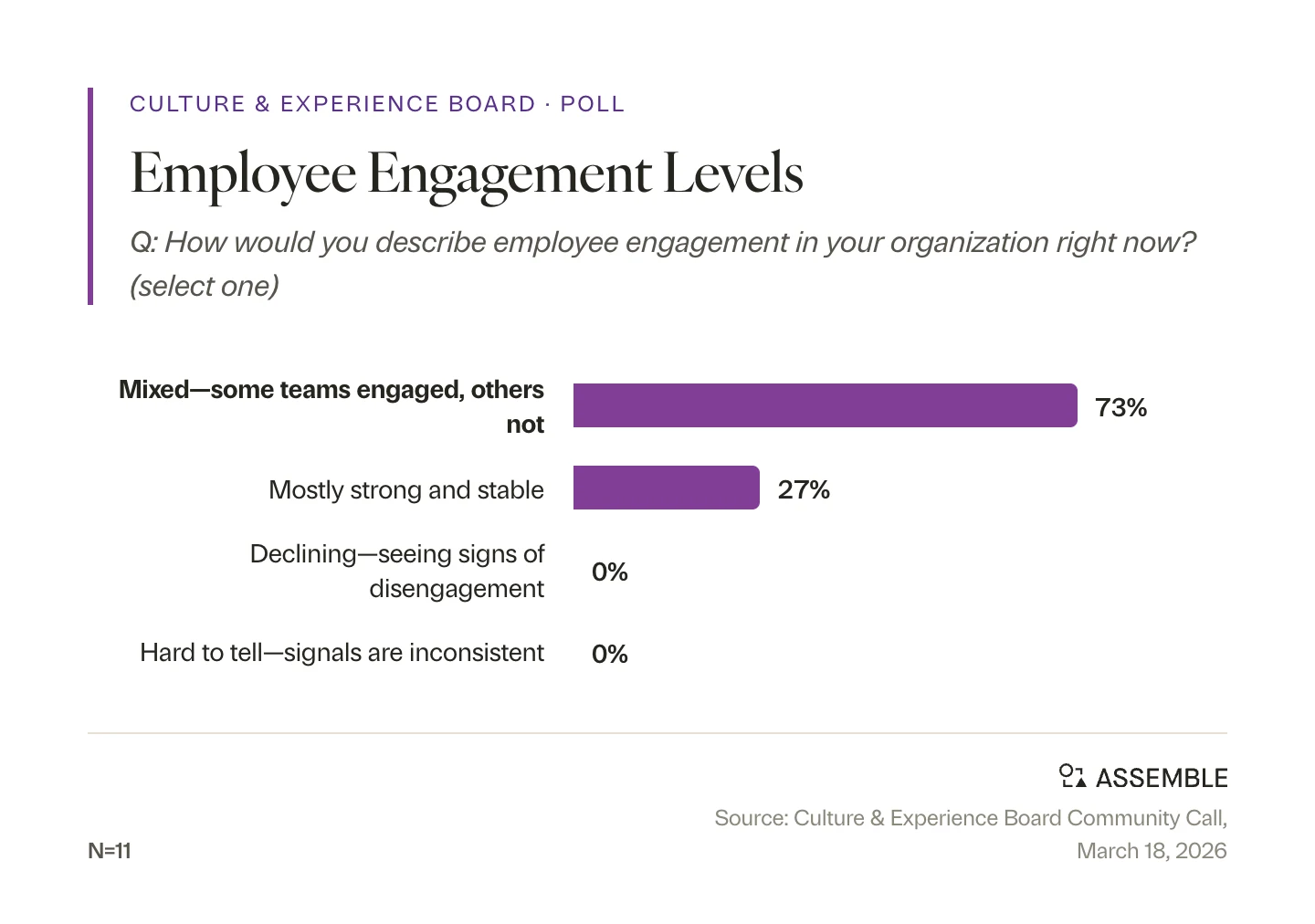
At first glance, workforce stability looks strong due to the steadiness of retention. Beneath the surface, a different picture is emerging: 73% of members report mixed engagement.
This is creating a growing risk for leadership: Are traditional metrics capturing the full picture of workforce health?
“We just had a record year, but I saw a lot of griping and discontentment on Glassdoor.”
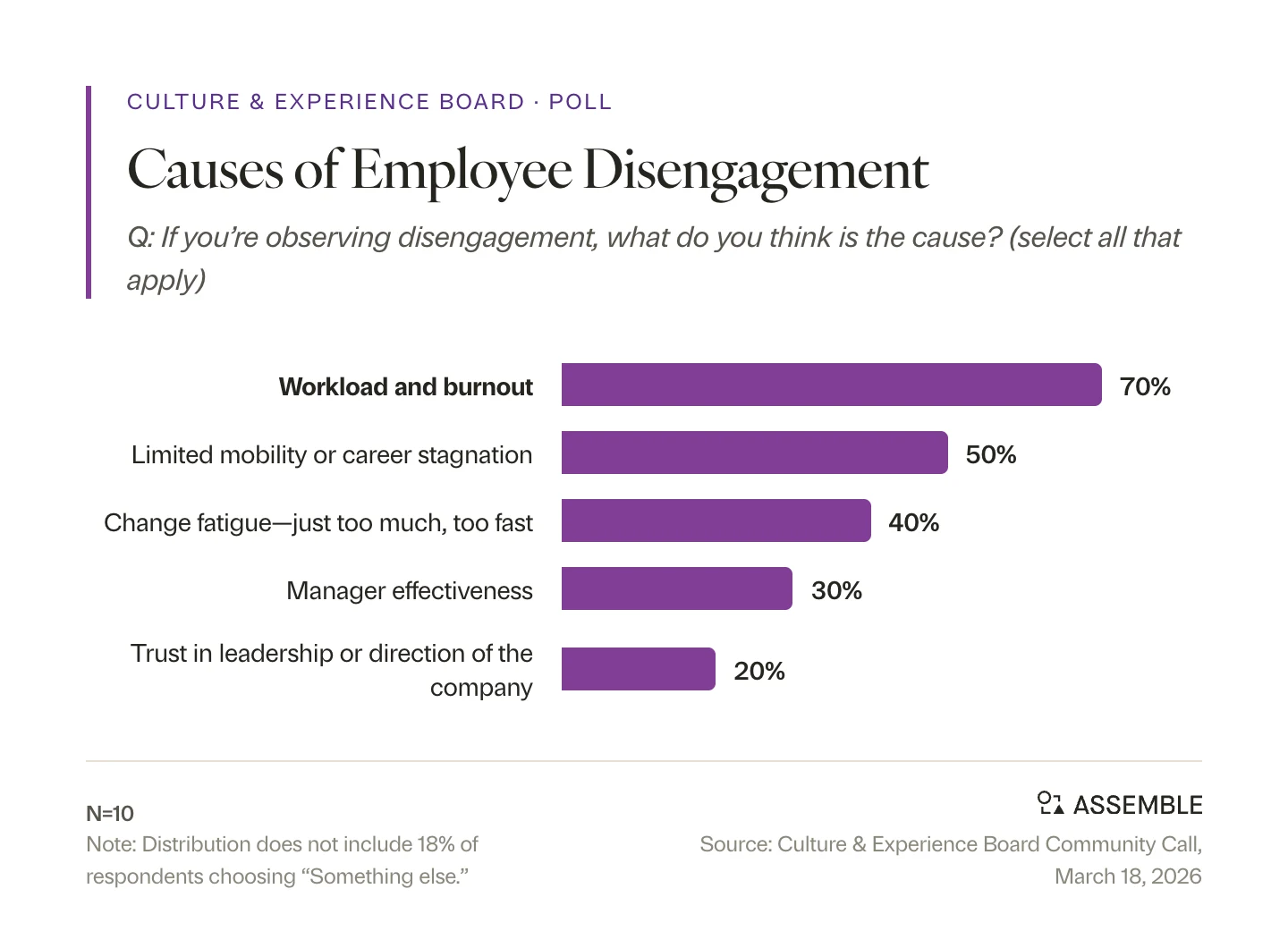
Poll results
Focus of the Discussion
Teams Are Facing a New Signal Problem
Employees are staying, but that isn’t the lone factor in engagement.
Organizations reported strong intent to stay metrics, yet lower engagement scores and visible signs of disengagement. As one participant put it, “Intent to stay response was strong… everything else was lower than the benchmark.” Feelings of burnout remain high.
This gap is showing up in behavior. Employees report confidence in their career opportunities, but declining advancement. Managers are a critical pressure point in this system. Employees rely on leaders to interpret and communicate change, but middle managers are often misaligned or uncertain.
Key Takeaways
Productivity metrics remain strong, while other signals, like lower survey benchmarks, declining interest in career advancement, and negative feedback in listening channels, point to a different experience. Several members noted that engagement varies significantly across populations, with leadership teams often described as engaged and supported, while frontline or broader employee groups are less engaged. Others highlighted differences across segments; for example, one member noted higher engagement paired with higher turnover in hourly populations.
For some members, retention no longer appears to be a reliable proxy for engagement. In some cases, employees expressed confidence in their career paths but still declined new opportunities, while others maintained productivity alongside visible dissatisfaction. Members also described inconsistencies across populations, reinforcing that engagement and turnover do not always move together.
Leaders consistently pointed to workload and burnout, limited mobility, and change fatigue as the primary drivers of disengagement. These showed up in examples like concerns about the pace of change, and employees feeling overextended. In a few cases, members described leaders themselves struggling to interpret shifts, which then affects how effectively they support their teams.
Many teams are relying on targeted, practical actions to address disengagement, while acknowledging limits to what they can change. Leaders shared approaches like stay interviews, more intentional 1:1s, recognition efforts, and increased communication, often focused on specific populations like high-potential employees. At the same time, several noted that larger issues, such as workload, pay, or policy constraints, are difficult to influence directly. Some members explicitly described these as “boulders” they cannot move, shaping where they choose to focus their efforts.
About the Culture & Experience Board and Assemble
The Culture & Experience Board is an Assemble community that helps senior culture, workforce experience, and organizational change leaders at the world's largest organizations make better, faster decisions through trusted peer insights.
We selectively share highlights from confidential member conversations to help leaders understand how peers are navigating complex workforce challenges and emerging opportunities.
If you'd like to learn more about the conversations happening inside our peer network, or how members connect with trusted peers to solve critical challenges, please contact us.