The Story in Brief

“The strongest EX teams are making sharper decisions about what they own, where partners should lead, and how repeatable systems create room for higher-value work. Technology supports that shift, but the real differentiator is redesigning how work gets done through an operating model built to scale without losing sight of the employee experience.”
Picking Up the Story
Meeting Bigger Expectations with the Same Team
Culture and experience leaders are being asked to support broader organizational priorities, from onboarding and communications to employee listening, recognition, and organizational change, without a corresponding increase in resources. As expectations continue to grow, so does the pressure to deliver meaningful employee experiences with lean teams.
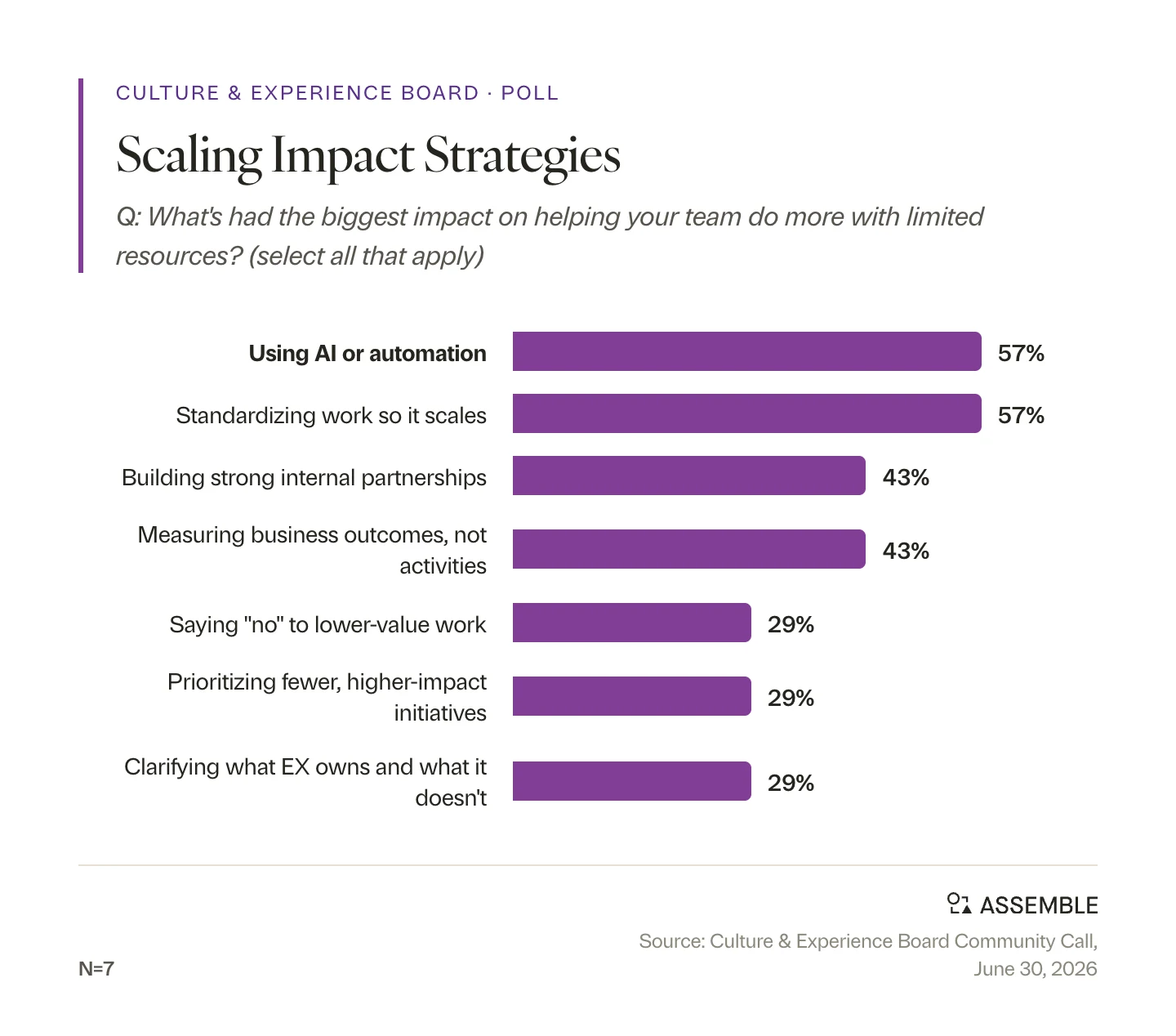
The question bringing members together was simple: How are lean EX teams scaling their impact?
“Don't try to boil the ocean. There are so many opportunities to improve the employee experience that it can become overwhelming. Pick what will have the biggest impact, demonstrate measurable value to leadership, and start there.”
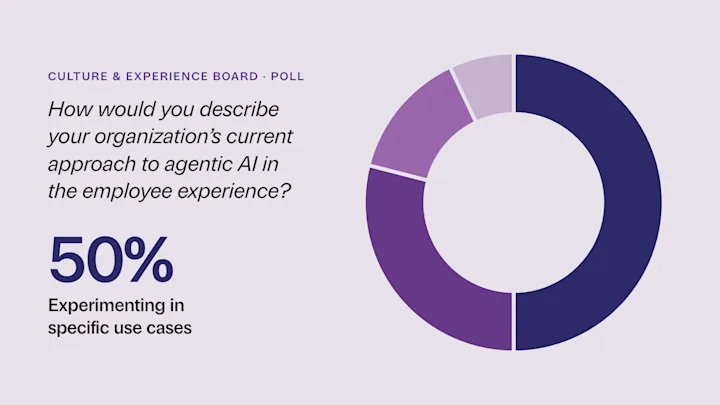
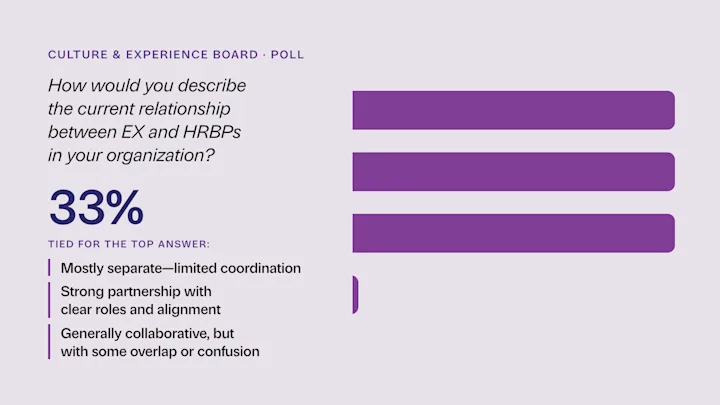
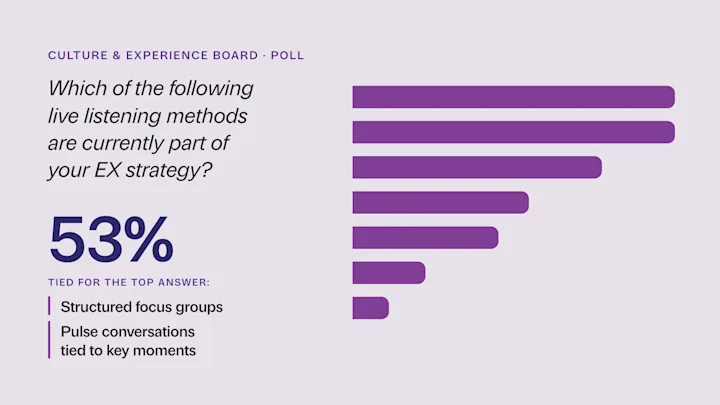
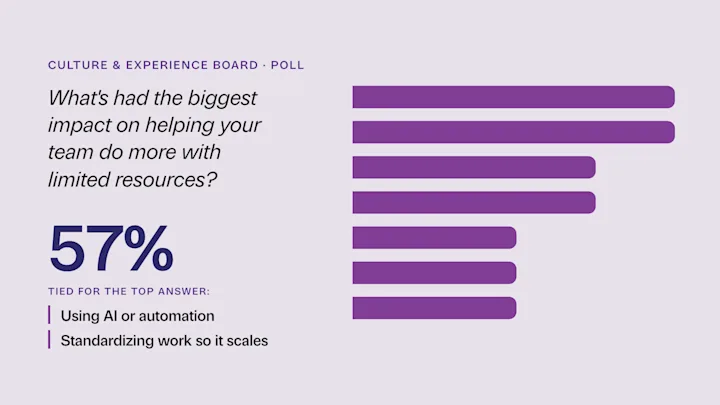
Poll results
Focus of the Discussion
Scaling Impact Means Rethinking How EX Works
Lean culture and experience teams are creating capacity by redesigning how work gets done. Standardized onboarding, repeatable communications, survey intake processes, and shared governance models reduce manual effort while allowing teams to focus on higher-value work. Rather than building every experience from scratch, leaders are creating consistent foundations that can be adapted where employees' needs differ.
The conversation also reflected a changing role for EX. As responsibilities expand, teams are becoming more intentional about what they own, what they influence, and what others can execute. Business partners, vendors, and HR stakeholders are taking on more delivery, allowing EX to focus on strategy, governance, and demonstrating business value.
Key Takeaways
Redesign work before investing in more technology. The biggest gains came from eliminating unnecessary work, not simply completing it faster. Standardized programs, clearer ownership, and repeatable processes created the foundation for scale, while AI amplified those improvements rather than replacing them. Before introducing another tool, pressure-test whether the work itself is designed to scale.
Standardize where consistency creates value, and personalize where it truly matters. Teams didn't abandon personalization; they became far more selective about where it improved the employee experience. Building common foundations first made it easier to support different audiences without adding unnecessary complexity. That discipline makes it easier to scale consistently while reserving customization for the moments employees value most.
Expand EX's impact by owning the strategy, not every task. Many teams increased their reach by shifting execution to HR partners, vendors, and business stakeholders while retaining governance and experience standards. That approach frees EX to focus on higher-value work without sacrificing consistency or requiring additional headcount. As demands continue to grow, strategic ownership is becoming more valuable than tactical control.
Frame employee experience as a business investment, not just an employee initiative. Successful business cases connected employee experience to measurable organizational outcomes rather than employee sentiment alone. Data mattered, but so did executive sponsorship and a narrative leaders could connect to business priorities. Teams that consistently translated EX into business value were better positioned to secure resources and expand their influence.
About the Culture & Experience Board and Assemble
The Culture & Experience Board is an Assemble community that helps senior culture, workforce experience, and organizational change leaders at the world's largest organizations make better, faster decisions through trusted peer insights.
We selectively share highlights from confidential member conversations to help leaders understand how peers are navigating complex workforce challenges and emerging opportunities.
If you'd like to learn more about the conversations happening inside our peer network, or how members connect with trusted peers to solve critical challenges, please contact us.