The Story in Brief

“The strongest thread was risk-calibrated governance. Members are not treating every AI-enabled task the same; they are thinking about guardrails, validation, access, and accountability based on what people are doing, and the risk involved.”
Picking Up the Story
Access to the Capability Is Not the Same as Expertise
AI is making it possible for employees to perform work that previously sat with specialists. Members are already seeing traditional role boundaries blur, but they are resisting the conclusion that access to a capability is interchangeable with expertise. Companies are responding with controls that vary according to the work. The emerging model is less about deciding who gets AI, and more about deciding how different kinds of AI-enabled work should happen.
“I'm worried about the next wave that's going to learn these easy ways, [and] don't have those skills to know that it was right.”
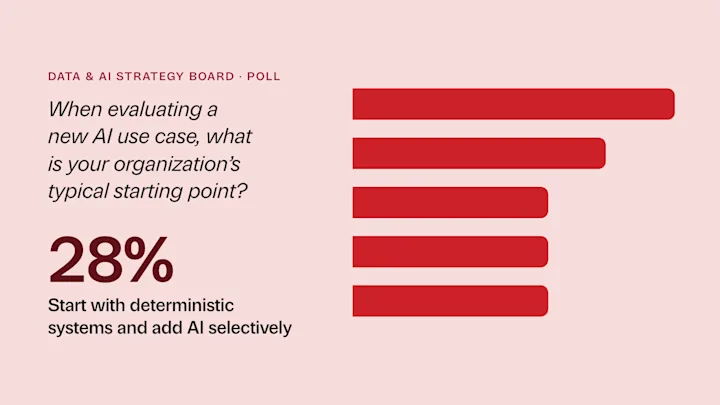
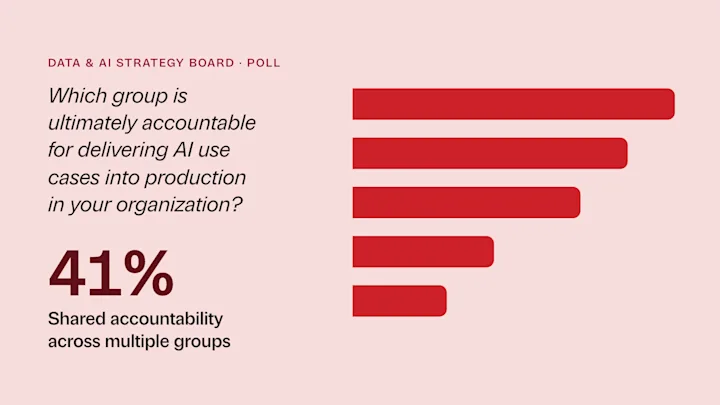
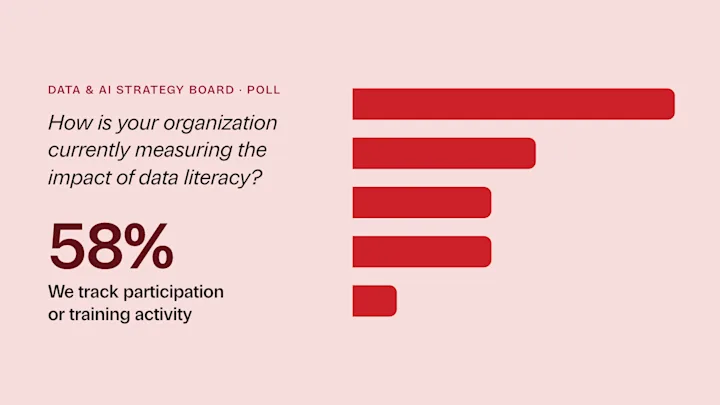
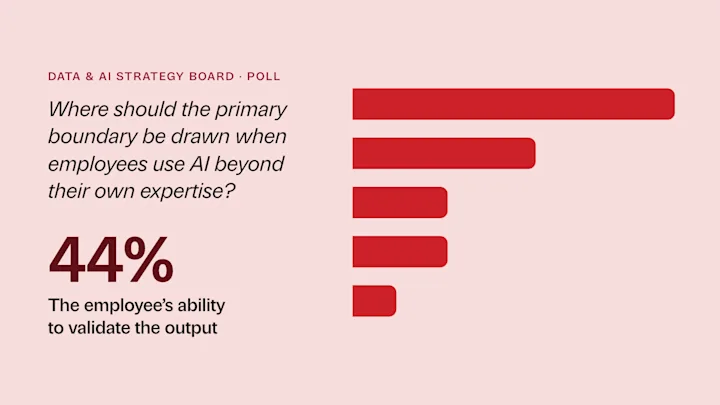
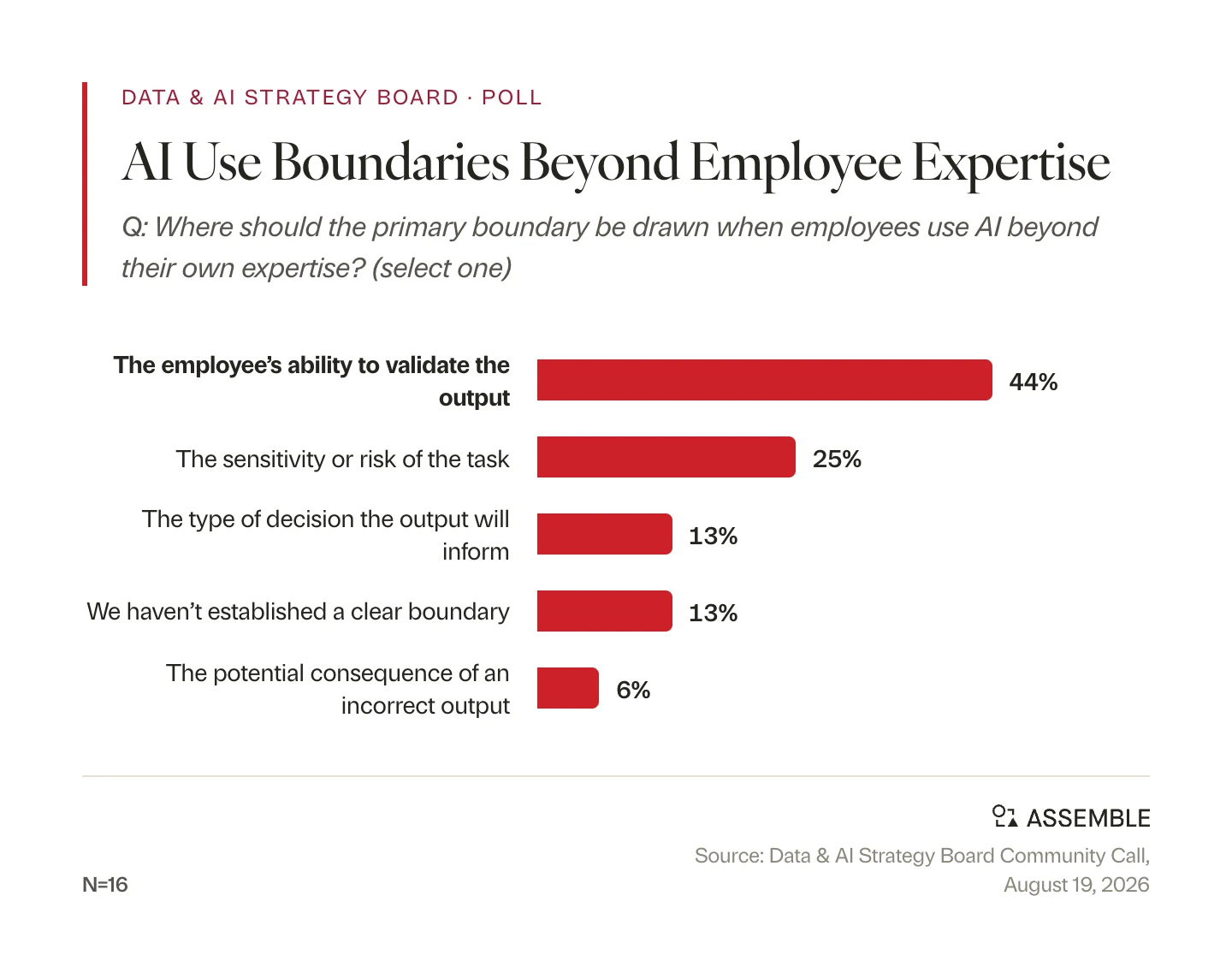
Poll results
Focus of the Discussion
Governance Moves From Tool Access to the Work Itself
Members are testing ways to broaden experimentation, without making AI use unrestricted. The hardest challenge appears when AI changes the workflow, rather than simply accelerating it. Existing processes often contain governance checkpoints that can disappear when employees find a new AI-enabled route to the same output. And the people currently pioneering those routes may not be capable of spotting bad results.
Organizations are beginning to respond at the role and team level by rewriting job descriptions, introducing AI competency testing, creating a new job family to orchestrate complex AI agents and systems, and exploring new pod structures. But no settled operating model emerged. Accountability remains with people, even as the mechanics of producing work change.
Key Takeaways
Set AI boundaries according to validation and risk, not job title alone. Members are already using profiles, access levels, budgets, policies, scanning, and risk-based controls to differentiate AI use. Define what employees must be capable of validating, and increase safeguards as the sensitivity or consequence of the work rises.
Preserve accountability when AI changes the path to the output. Members are reinforcing that employees remain accountable for AI-enabled work, with additional checks for more sensitive uses. Review workflows for governance checkpoints that may disappear when AI allows people to bypass older processes.
Separate the ability to produce specialized work from the expertise required to judge it. Members pushed back on the assumption that AI makes technical domains interchangeable. As non-experts gain new capabilities, explicitly determine where domain expertise is still required for validation, deployment, or consequential decisions.
Create controlled space for experimentation instead of making governance synonymous with restriction. One member’s AI Cup encourages employees to develop and pitch use cases while broader policies, scanning, budgets, and access controls remain in place. Structured experimentation can expose useful applications without abandoning common safeguards.
Reassess roles and workflows instead of simply adding AI to job descriptions. Members are testing new job families, competency assessments, and team structures as AI changes how work gets done. Pressure-test whether existing role boundaries and workflows still make sense before treating AI proficiency as another line in every job description.
About the Data & AI Strategy Board and Assemble
The Data & AI Strategy Board is an Assemble community that helps senior data, analytics, governance, and AI leaders at the world's largest companies make better, faster decisions through trusted peer insights.
We selectively share highlights from confidential member conversations to help leaders understand how peers are navigating complex challenges and fast-moving, high-stakes moments.
If you'd like to learn more about the conversations happening inside our peer network, or how members connect with trusted peers to solve critical challenges, please contact us.