The Story in Brief

“Enterprise leaders aren't debating whether AI belongs in critical workflows anymore—they're deciding where certainty still matters most. The emerging pattern is clear: trusted data remains deterministic, while AI is layered on to interpret, recommend, and accelerate decisions. That separation allows organizations to move faster without weakening governance.”
Picking Up the Story
AI Adoption Is Raising New Questions About Trust
As organizations move generative AI from experimentation into production, enterprise leaders are facing a new challenge: determining where probabilistic AI belongs within business processes that have long depended on deterministic, repeatable outcomes.
That question brought members together to explore how organizations can expand AI adoption while maintaining confidence in enterprise data, business decisions, and governance.
“AI is probabilistic in nature, but our real world...needs to be deterministic. The answer has to be correct, not kind of correct.”
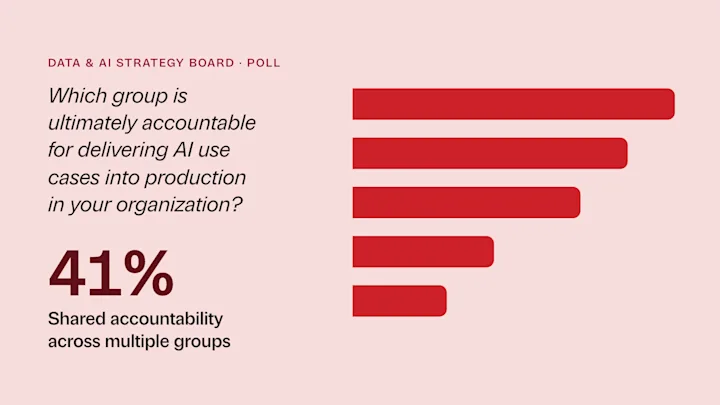
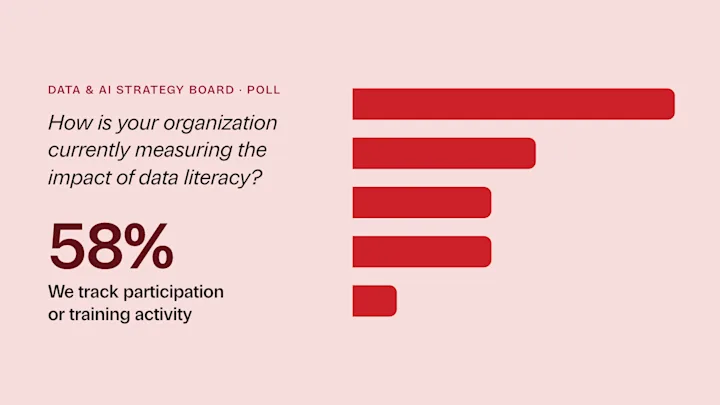
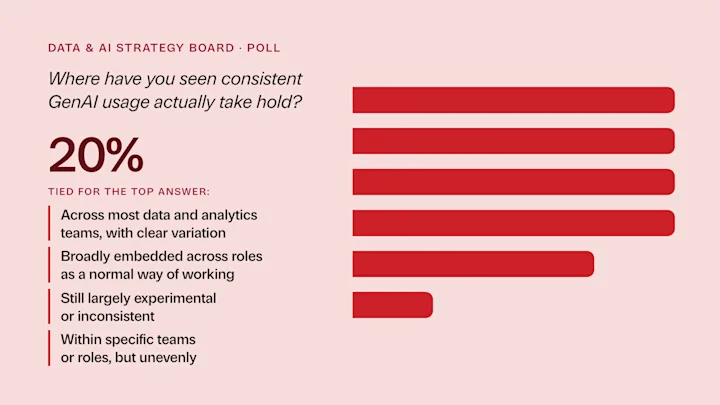
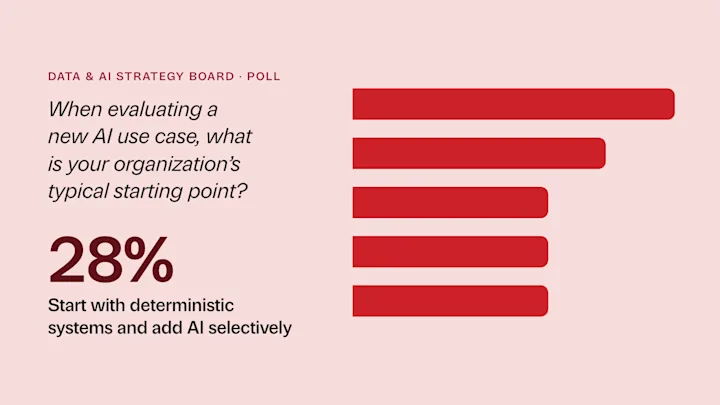
Poll results
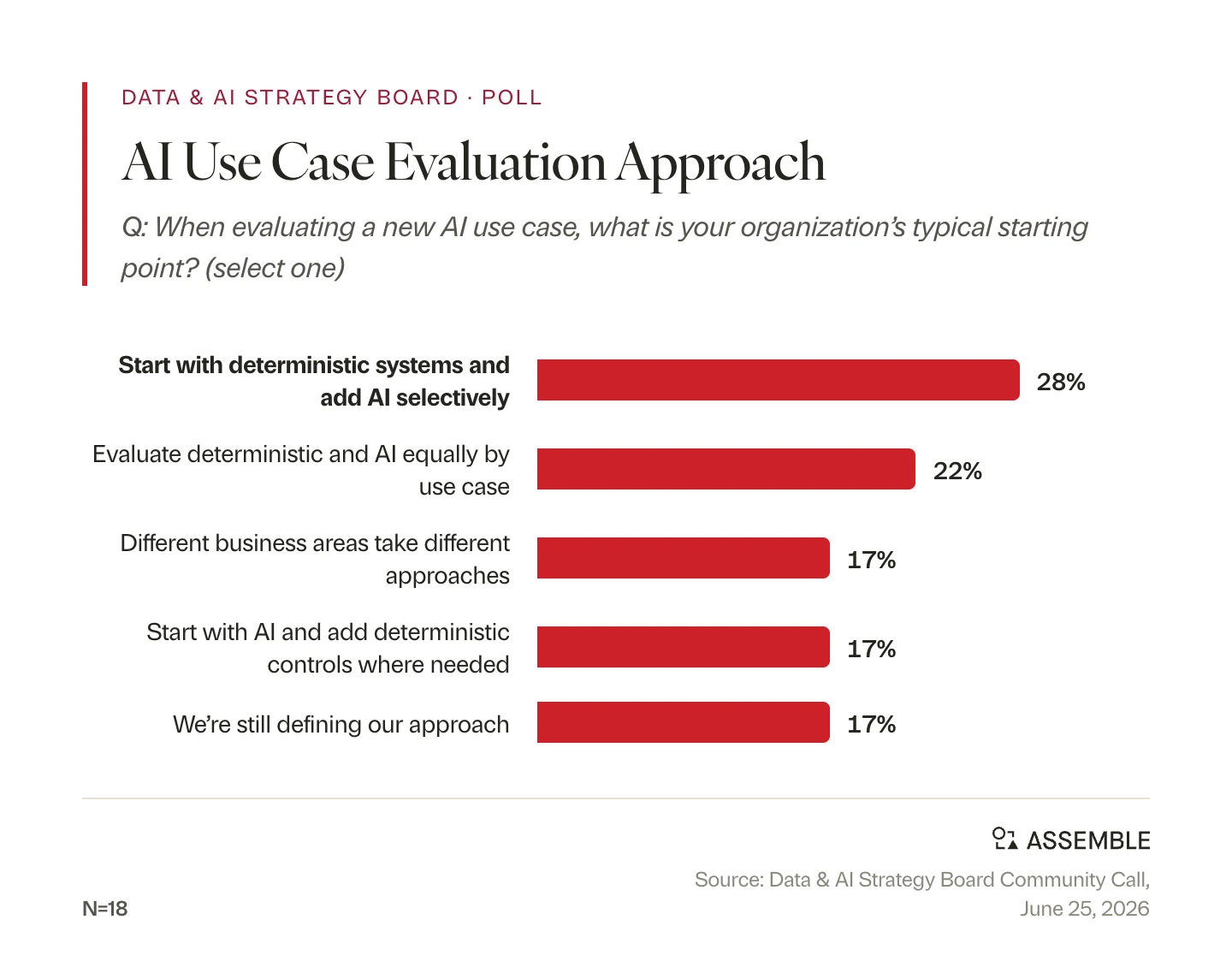
Focus of the Discussion
Enterprise AI Is Becoming an Architecture Question
Rather than choosing between deterministic systems and probabilistic AI, organizations are assigning each a distinct role. Trusted metrics, semantic layers, and governed data provide business-critical answers, while AI synthesizes information, recommends next steps, and improves the user experience. Context layers and orchestration are becoming foundational because they determine how requests are classified and routed.
Attention is also shifting beyond individual AI use cases to the operating models required to scale AI. Human approval remains the norm for consequential business actions, while organizations are beginning to tackle broader challenges around agent orchestration, observability, lifecycle management, and enterprise governance, areas where mature solutions are still emerging.
Key Takeaways
Separate trusted enterprise facts from AI interpretation. Rather than asking AI to become a system of record, organizations are keeping certified metrics and governed data in deterministic platforms while using AI to summarize, interpret, and recommend next steps. This approach helps expand AI use without compromising trust in business-critical information.
Invest in context before investing in autonomy. Organizations are finding that context layers, semantic modeling, and orchestration often improve reliability more than deploying larger or more sophisticated models. Before expanding autonomous AI capabilities, ensure requests can be consistently classified, routed, and grounded in trusted enterprise data.
Keep humans accountable for business-critical actions. Human approval remains the prevailing governance model whenever AI recommendations create, update, or delete enterprise records. While organizations expect autonomy to expand over time, maintaining human accountability today provides the auditability and confidence needed for high-impact workflows.
Prepare now for enterprise-scale AI governance. Building AI applications is quickly becoming the easier part. Leaders are increasingly shifting their attention to operating models that can govern agents, orchestrate workflows, maintain observability, and adapt as platforms evolve. Investing in those capabilities now will provide more flexibility than optimizing for any single vendor or tool.
About the Data & AI Strategy Board and Assemble
The Data & AI Strategy Board is an Assemble community that helps senior data, analytics, governance, and AI leaders at the world's largest companies make better, faster decisions through trusted peer insights.
We selectively share highlights from confidential member conversations to help leaders understand how peers are navigating complex challenges and fast-moving, high-stakes moments.
If you'd like to learn more about the conversations happening inside our peer network, or how members connect with trusted peers to solve critical challenges, please contact us.