The Story in Brief

“Conversation around GenAI has become much more about engagement and use cases than talent skill definitions. What's interesting is how basic the use cases still are, even among data leaders; things like saving time and drafting emails. Everyone wants use cases, and that’s clearly where the energy is.”
Picking Up the Story
Turning GenAI Into Real Workflows
GenAI tools are now widely available inside many enterprises. Yet turning that access into consistent everyday usage remains difficult.
Members explored adoption patterns, governance approaches, and the types of use cases that are gaining traction.
“When you say ‘use it because it will work better,’ that doesn’t work.”
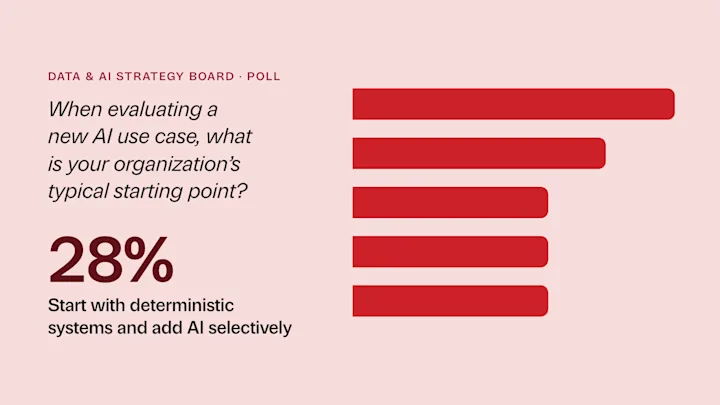
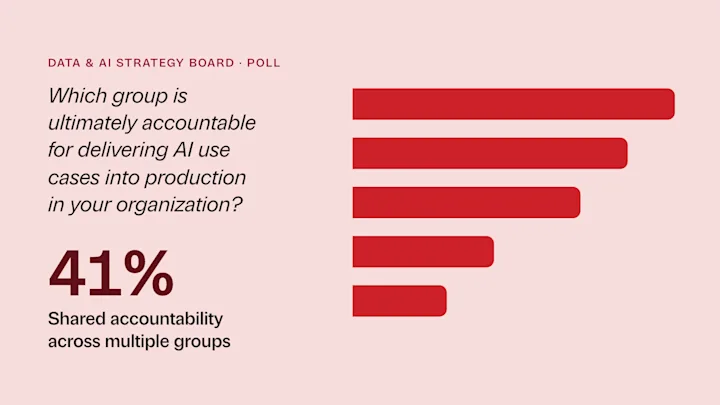
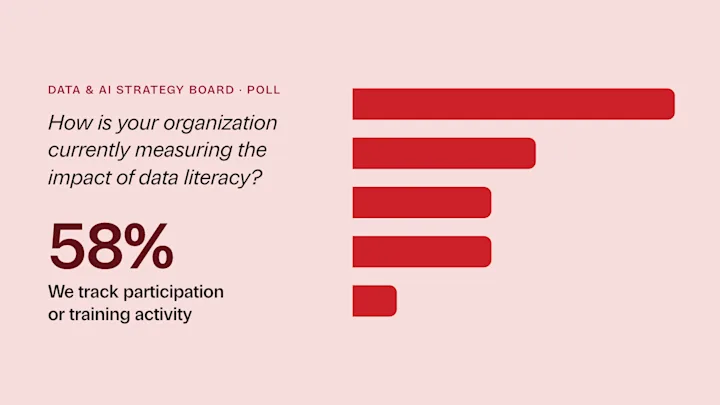
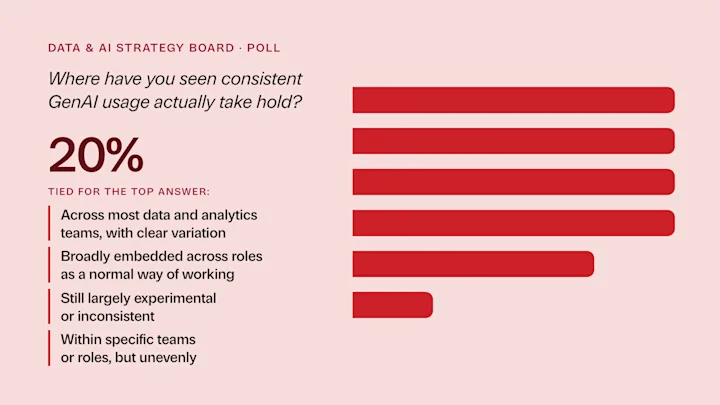
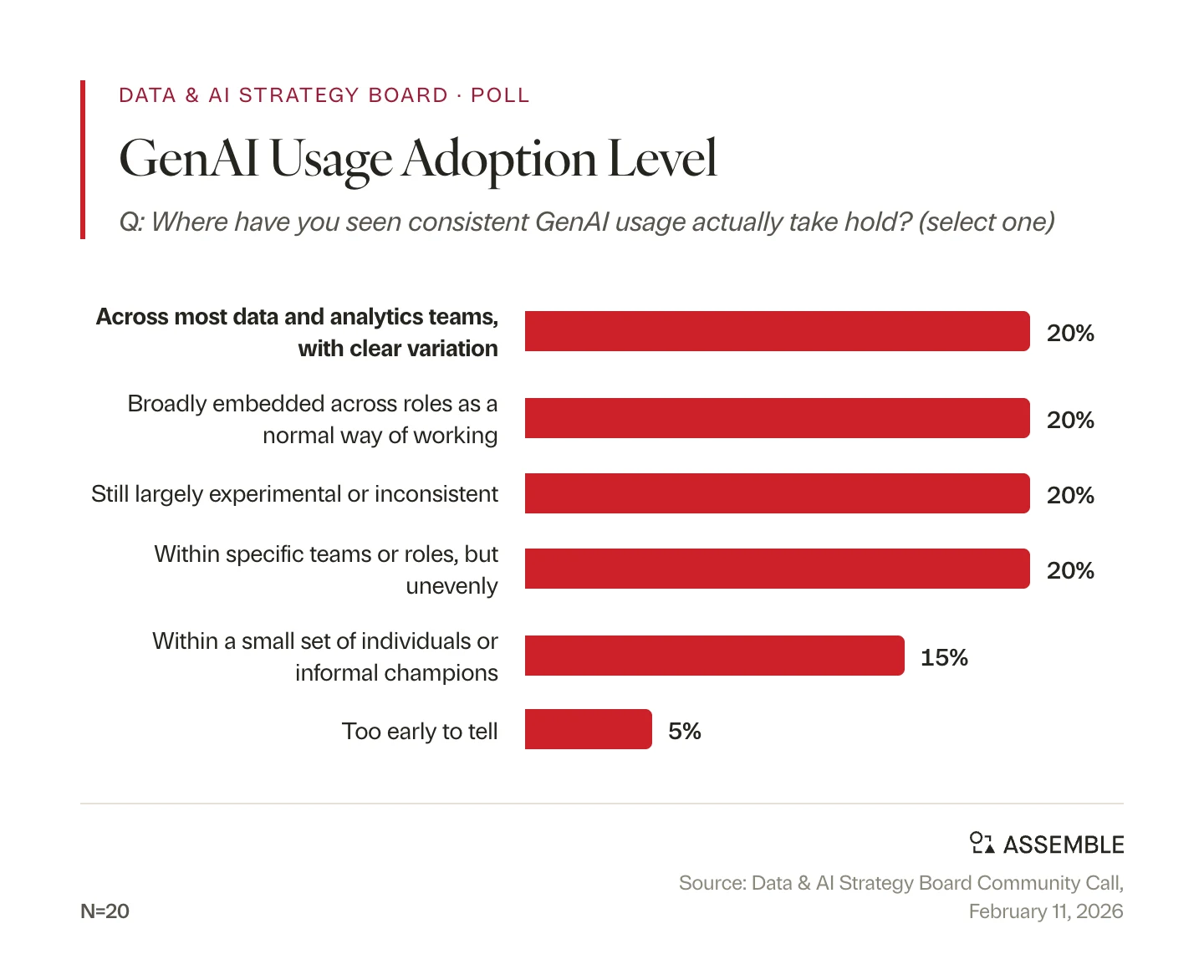
Poll results
Focus of the Discussion
Teams Are Learning That Access Doesn’t Guarantee Adoption
GenAI adoption is seeing widespread access, but uneven engagement.
Many organizations have enabled tools such as ChatGPT and Copilot across their workforce, but sustained usage often varies by team or role. Several participants reported that adoption initially rises after launch, then stabilizes. Some teams use AI frequently, while others remain hesitant or disengaged. Time pressure was cited as a major factor limiting experimentation. As one participant explained, “You have to have time to play and explore.”
Governance models also influence adoption patterns. Centralized governance can slow innovation, while fully decentralized experimentation may bypass necessary controls.
Key Takeaways
Poll responses were evenly distributed across maturity stages, with no clear pattern of adoption emerging. This suggests that most teams are still working through what “embedded” really looks like in practice. Some leaders are now tracking weekly or monthly engagement, and noticing meaningful variation by role, team, and persona.
Members consistently noted that open-ended experimentation led to limited or inconsistent engagement. Adoption increased for many teams when they were shown concrete, role-relevant examples, such as drafting structured claims communications, generating performance summaries, reviewing procurement contracts, or accelerating prototype development.
Responsible AI committees and structured intake processes were common. However, several members described tension between central prioritization and local experimentation. In some organizations, committees became bottlenecks; in others, teams bypassed governance entirely to move faster. Leaders are now exploring federated approaches that preserve guardrails, while enabling decentralized decision-making.
Currently, not many organizations are driving AI adoption with financial rewards. It has been more of a cultural push than a compensatory one. Members talked about using hackathons, internal showcases, prompt contests, shared goals, and executive shoutouts to build momentum.
The discussion expanded beyond prompting skills to a broader view of what long-term AI capability really requires. Members talked less about individual training and more about the underlying architecture needed to make AI work well, such as stronger metadata foundations, scalable infrastructure, and leaders who truly understand how models behave, including their limitations.
About the Data & AI Strategy Board and Assemble
The Data & AI Strategy Board is an Assemble community that helps senior data, analytics, governance, and AI leaders at the world's largest companies make better, faster decisions through trusted peer insights.
We selectively share highlights from confidential member conversations to help leaders understand how peers are navigating complex challenges and fast-moving, high-stakes moments.
If you'd like to learn more about the conversations happening inside our peer network, or how members connect with trusted peers to solve critical challenges, please contact us.