The Story in Brief

“Companies have more strategic choices around SBTi than I expected going into this discussion. The current-versus-next-standard decision, potential flexibility around Scope 3, and the possibility of waiting for greater clarity mean leaders are actively evaluating which path their businesses can realistically execute.”
Picking Up the Story
Turning Targets Into Funded, Owned Work
Setting and validating a science-based target was already a heavy lift. For many companies, the harder phase is now underway: translating a long-term commitment into reductions the business can fund and deliver.
That work is running into pressure from several directions at once. Business conditions have changed, SBTi requirements are getting a big refresh, and many of the toughest reductions depend on functions and suppliers outside sustainability teams’ direct control.
“Having a commoditized certificate that can count towards science-based targets reductions [under the new Version 2] is going to really be a game changer, and I'm quite excited about that.”
Poll results
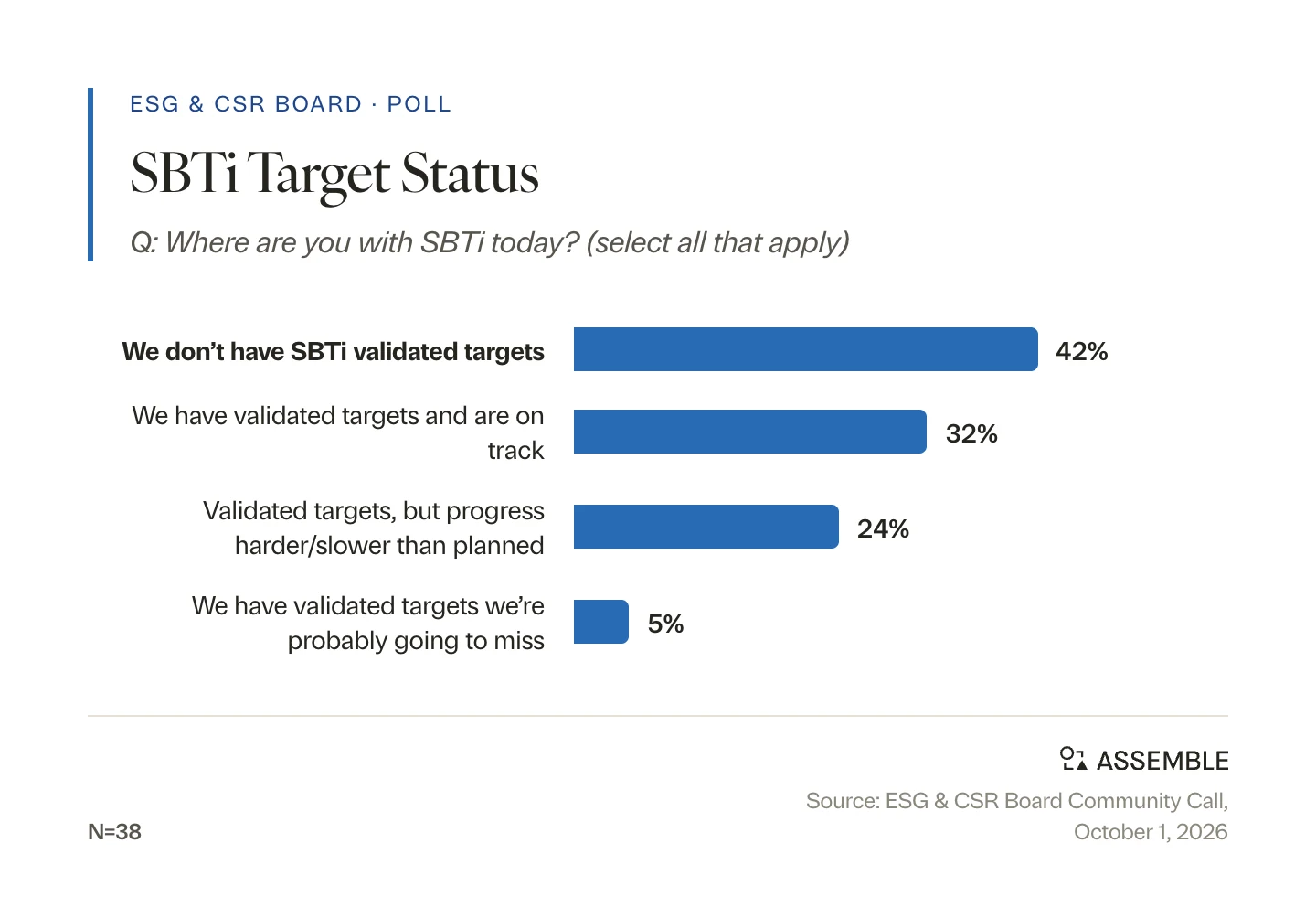
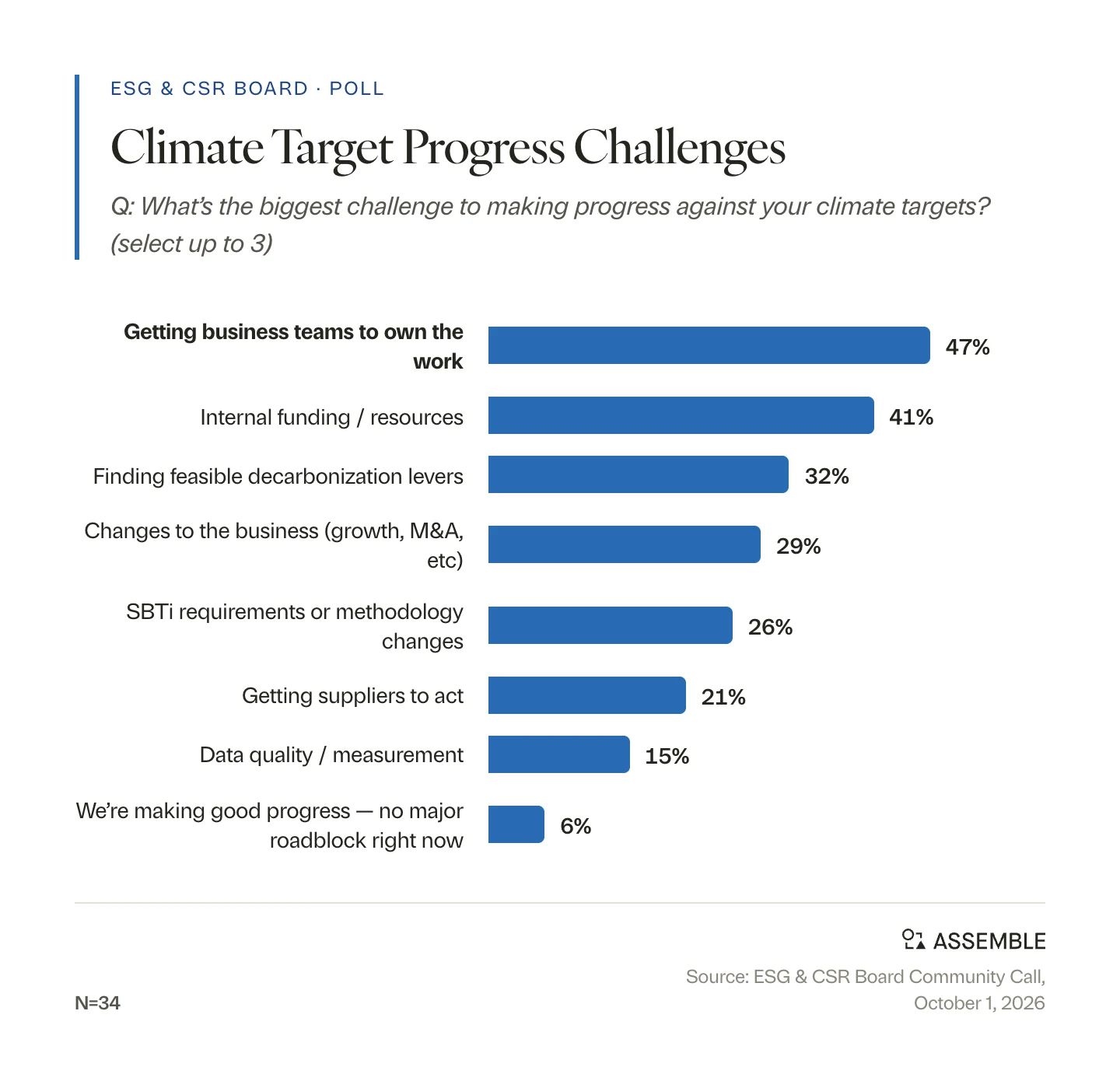
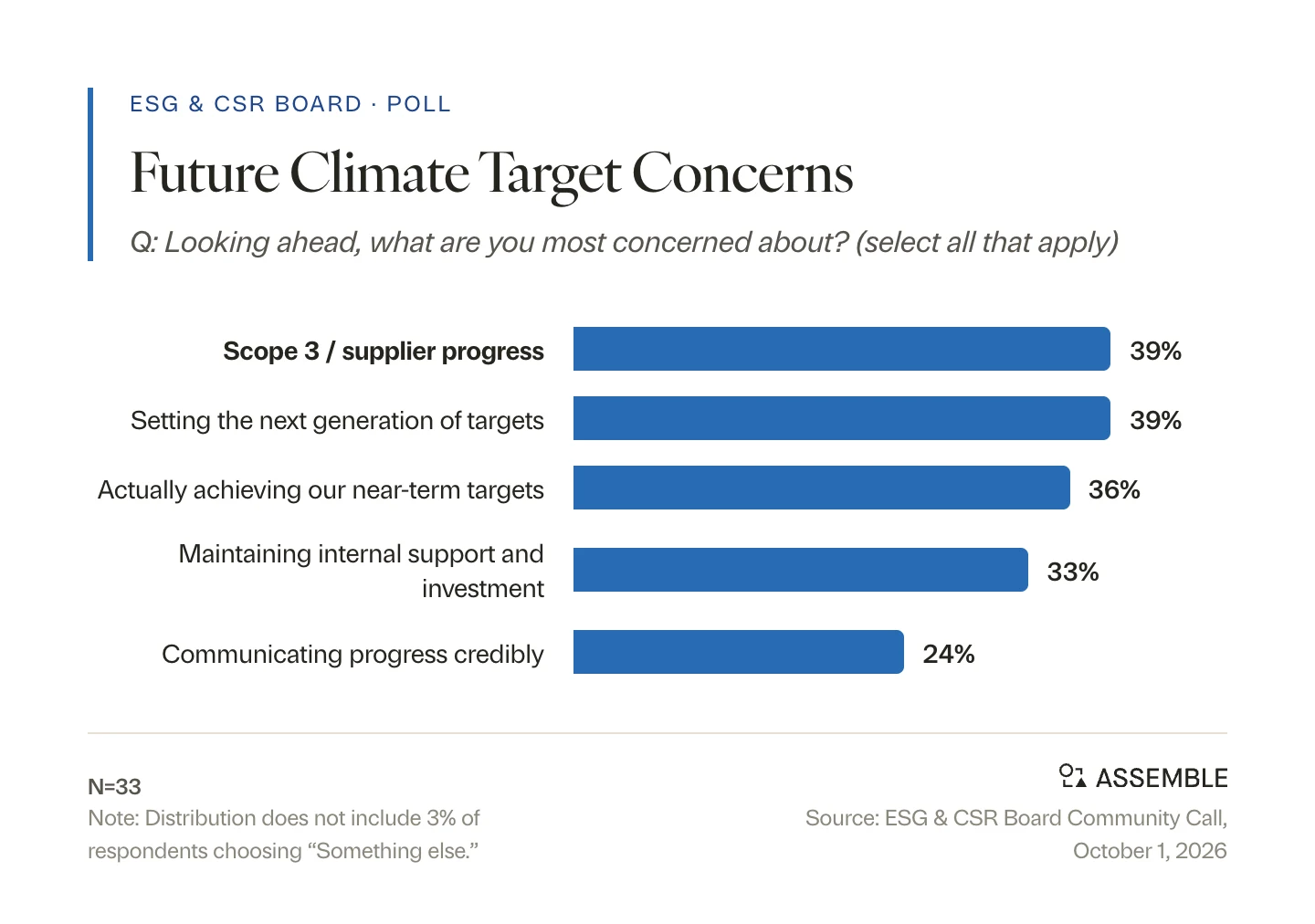
Focus of the Discussion
The Target Path Is Part of the Execution Strategy
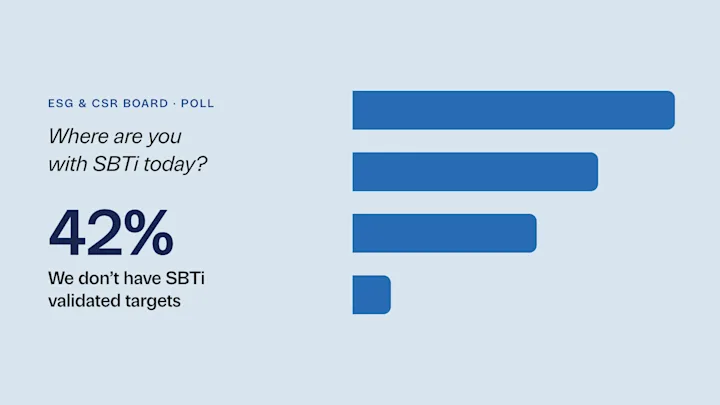
Following the existing SBTi standard versus Version 2 can create different implications for data readiness, capital requirements, Scope 1 and 2 treatment, and feasible reductions. For companies approaching revalidation, choosing a path increasingly requires weighing those requirements against what the business can realistically deliver.
Scope 3 adds another variable. Emerging market-based mechanisms could expand the options available in commodity-heavy value chains where physical traceability is difficult, but the guidance is still developing. Companies are making near-term target and investment decisions while potentially significant changes to the framework remain in motion.
Key Takeaways
Model both standards against your roadmap. Compare the current standard and Version 2 against the reductions, data, capital, and operational changes each would require. One company found that separating Scope 1 and 2 would make its commercial-vehicle challenge considerably harder; another saw emerging Scope 3 provisions as potentially better suited to its constraints. Use the comparison to identify execution risk before choosing a path.
Keep optionality while Scope 3 rules develop. Emerging market-based mechanisms could materially change which value-chain interventions receive recognition, particularly where physical traceability is limited. Keep those mechanisms in scenario planning while identifying which investments remain defensible if the final accounting treatment changes.
Put a business metric behind the funding ask. Translate decarbonization projects into measures that already influence capital decisions. One company calculated revenue at risk from customer expectations; another estimated roughly $150 million of required investment before committing to its targets. For sustainability-linked financing, include assurance costs in the economics as they can consume the incremental savings.
Convert the 2030 pathway into annual commitments. Define the reductions required this year, assign them to operating leaders, and connect them to existing accountability mechanisms. Companies using annual climate KPIs and executive compensation found that the structure strengthened budget conversations and reduced recurring negotiation over near-term actions.
Re-sell the commitment when leadership changes. Reconnect current executives to the business rationale behind the target, such as customer demand, shareholder pressure, competitive position, investor expectations, or another driver. At one company, only one senior leadership team member remained from the group involved when its sustainability blueprint began in 2018. Build re-socialization into the operating cadence for multiyear targets.
About the ESG & CSR Board and Assemble
The ESG & CSR Board is an Assemble community that helps senior ESG, sustainability, and CSR leaders at the world's largest organizations make better, faster decisions through trusted peer intelligence.
We selectively share highlights from confidential member conversations to help leaders understand how peers are navigating complex workforce challenges and emerging opportunities.
If you'd like to learn more about the conversations happening inside our peer network, or how members connect with trusted peers to solve critical challenges, please contact us.