The Story in Brief

“Platforms often start as efficiency unlocks, but become constraints as programs evolve. The conversation reinforced that misalignment between tool capability and strategy is cumulative, and difficult to unwind once embedded.”
Picking Up the Story
Rethinking CSR Platforms
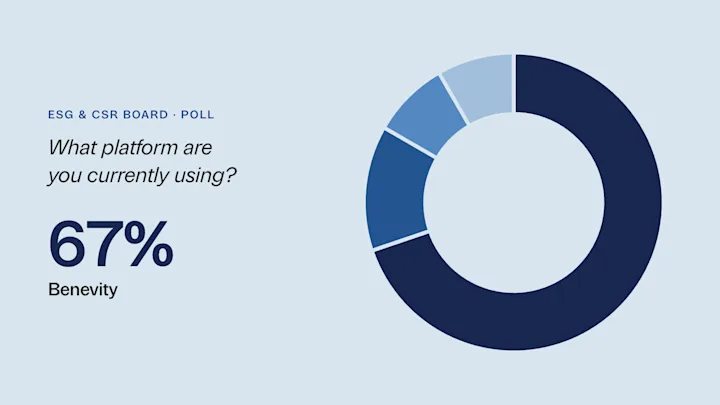
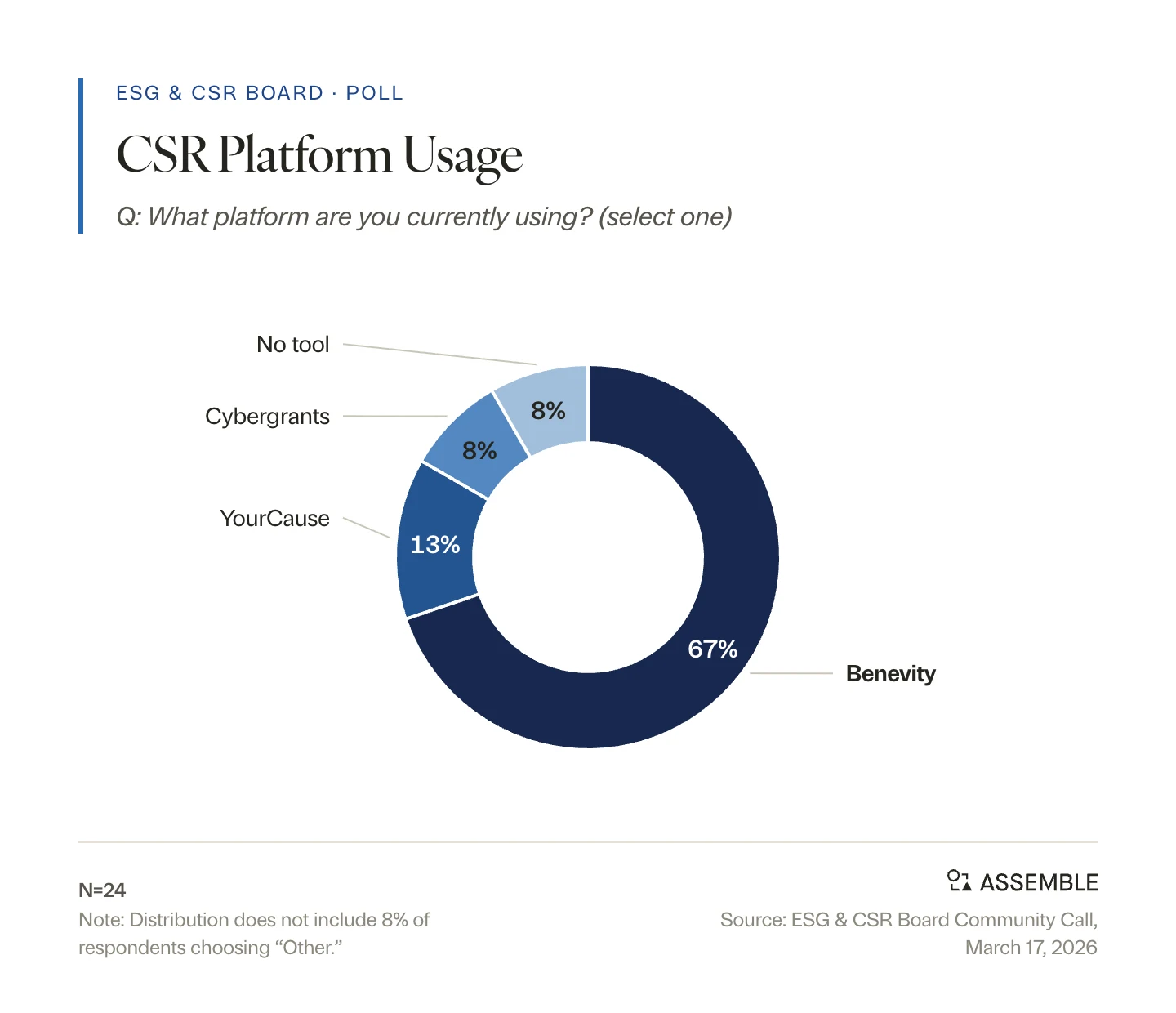
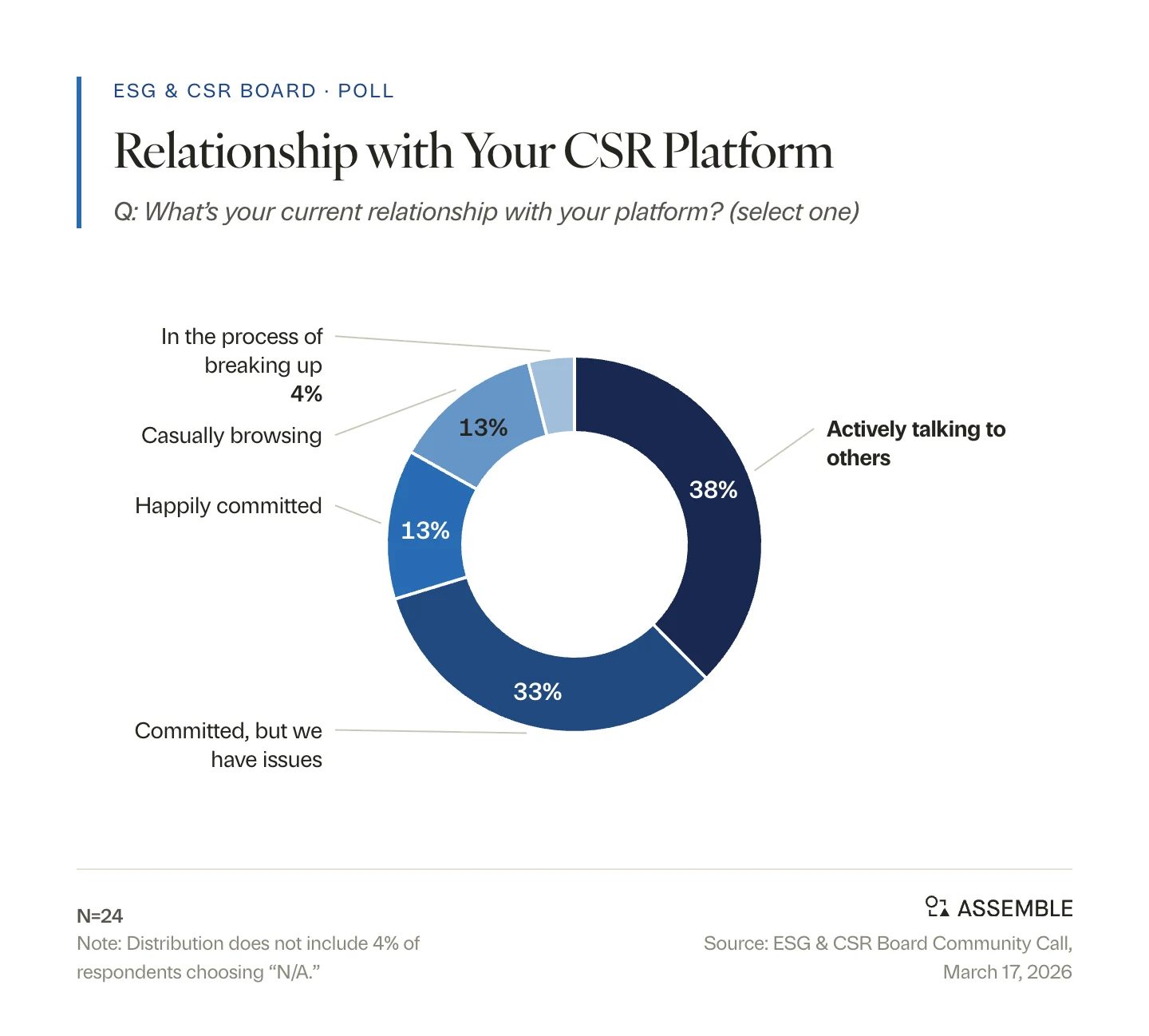
CSR platforms are deeply embedded across organizations, with 67% of participants using Benevity alone. But that adoption masks a growing tension: 75% of leaders are reporting issues with their current platform, or are actively exploring alternatives.
The challenge isn't choosing a platform, but deciding what to do when the platform no longer fits.
“Ours has literally changed once a year, every year, for three plus years now.”
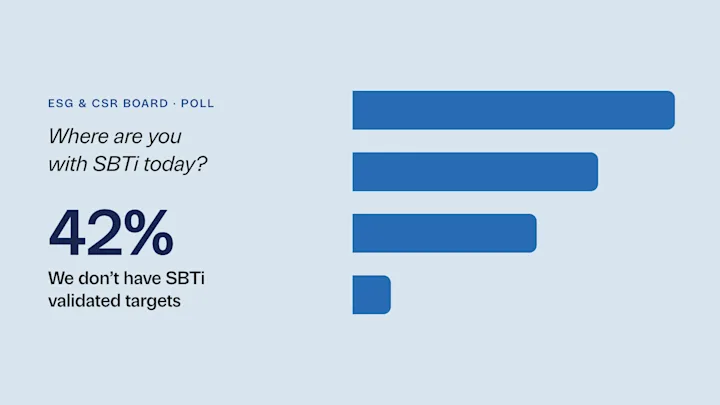
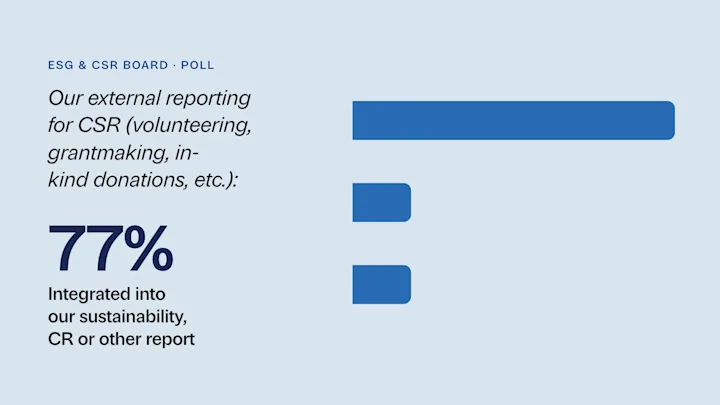
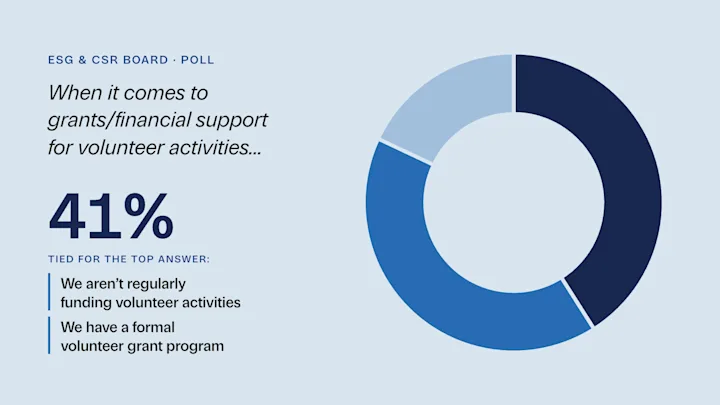
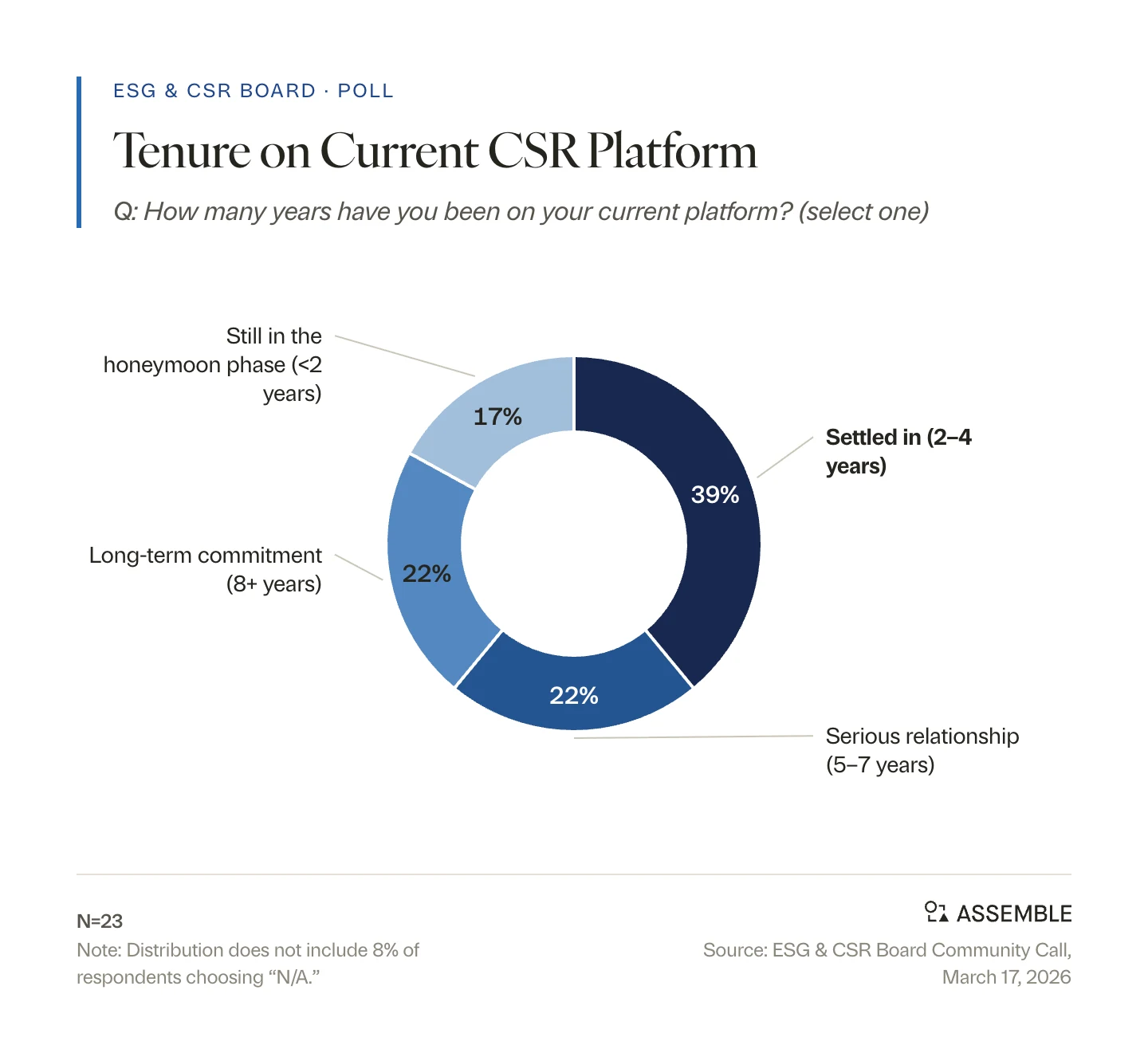
Poll results
Focus of the Discussion
Managing Imperfect Systems Through Change
What once simplified CSR operations is now making them harder.
Early on, these tools deliver clear efficiency gains, replace manual processes, and save significant administrative time. But as programs grow more complex, those same systems become harder to adapt. As one participant put it, “There’s no perfect system.”
The core issue is structural. Most platforms are built with fixed workflows and limited customization; data fragmentation compounds the problem. This disconnect undermines confidence in reporting, and makes it difficult to deliver clear, executive-level insights.
Key Takeaways
CSR platforms often solve yesterday’s problems well, but struggle to keep pace as programs mature. Several members shared that platforms like Benevity and YourCause delivered real early wins, especially when replacing manual nonprofit verification and offline workflows. Administrative time dropped, participation scaled, and processes felt cleaner. Over time, however, those gains leveled off as programs expanded into more complex areas, like disaster relief, scholarships, or global customization. What once created efficiency began requiring workarounds.
Customization limits are forcing teams to adapt their programs to the tool. Members described hard-coded workflows, limited front-end flexibility, and constraints around direct payments to individuals for disaster relief and scholarship programs, forcing them to adjust (or even eliminate) some programs. YourCause users perceived more configurability within grants modules, and slightly greater flexibility in certain workflows compared to Benevity, but the platform still has its limitations. Many are questioning whether a single all-in-one system is effective, as integration gaps with payroll, DAFs, PowerBI, and project management systems push some towards using multiple platforms.
Reporting surfaced as one of the biggest frustrations. Members described modules that don’t fully integrate, multiple portals within a single ecosystem, and inconsistencies between legacy and new reporting tools. Limited reporting licenses and constrained dashboard customizations add friction. As executive expectations around measurable impact rise, time spent reconciling data, rather than analyzing it, has become increasingly hard to justify.
There is growing movement toward RFPs, alternative vendors, and multi-system ecosystems. Many members are either actively exploring alternatives, or are powering through the issues they have with their current tool. Benevity remains dominant, particularly for global programs, but leaders are increasingly evaluating platforms like YourCause (Blackbaud), Groundswell, Goodstack, and Deed. During the RFP process, members emphasized the importance of ensuring a thorough understanding of escalation pathways prior to signing the contract, and leveraging other teams like vendor management, IT or HRIS to play “good cop, bad cop.”
Account lead relationships can make or break the platform experience. Experiences with account management varied widely, even among organizations on the same platform. Some members described frequent account executive turnover and slow escalation paths, despite paying for premium support tiers. Others reported materially better outcomes after requesting a new AE, adding a technical account resource who could connect directly to developers, or addressing their challenges with the vendor early on.
About the ESG & CSR Board and Assemble
The ESG & CSR Board is an Assemble community that helps senior ESG, sustainability, and CSR leaders at the world's largest organizations make better, faster decisions through trusted peer intelligence.
We selectively share highlights from confidential member conversations to help leaders understand how peers are navigating complex workforce challenges and emerging opportunities.
If you'd like to learn more about the conversations happening inside our peer network, or how members connect with trusted peers to solve critical challenges, please contact us.