The Story in Brief

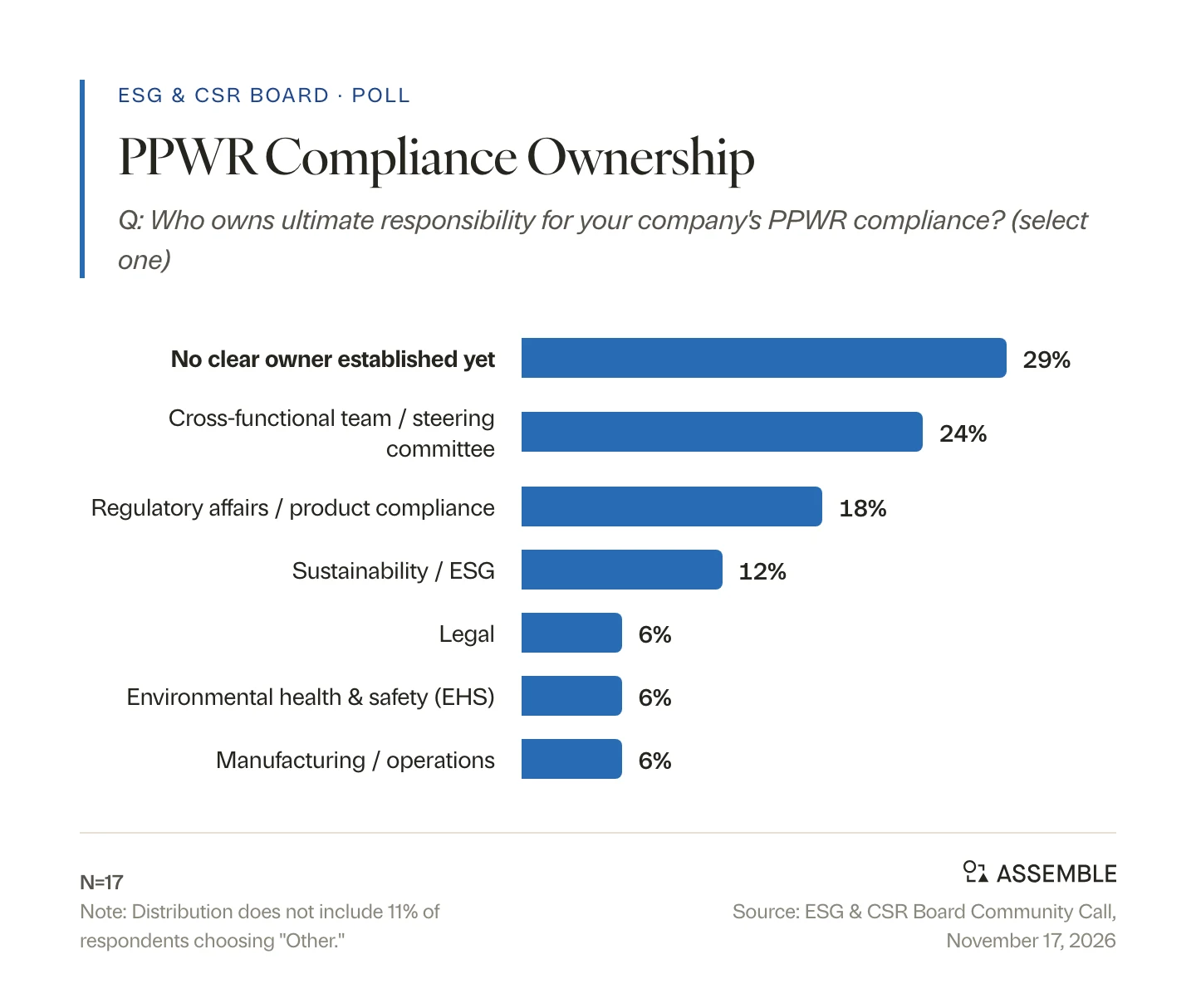
“After this call, I'm struck that ownership of PPWR is a question about what the regulation actually IS. It’s part compliance, part product design, part supply chain, part sustainability strategy. Until companies figure out which piece belongs where, the work tends to land on whoever raised their hand first.”
Picking Up the Story
The Next PPWR Deadlines Raise the Stakes
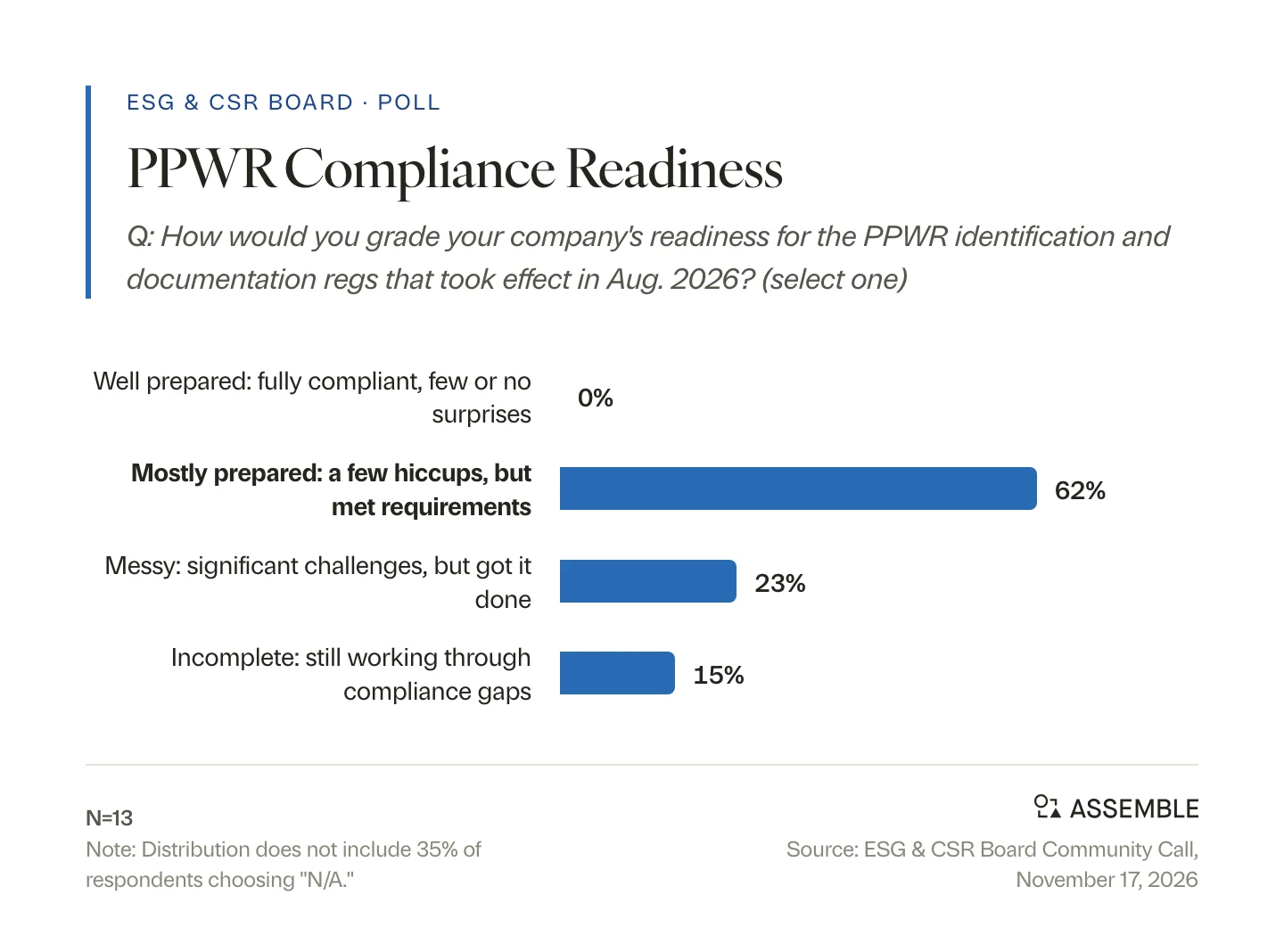
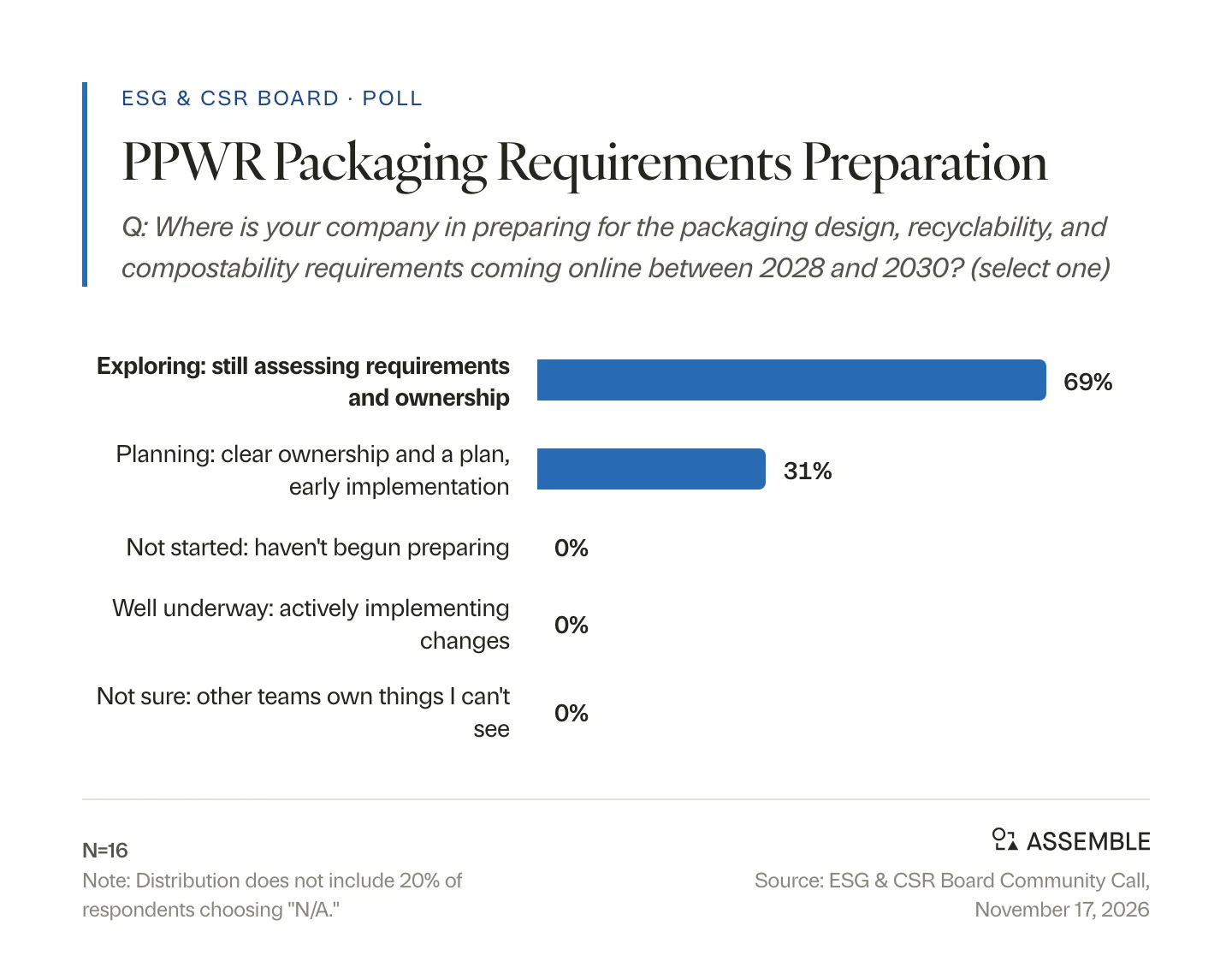
The EU's Packaging and Packaging Waste Regulation (PPWR) introduced identification and documentation requirements in August 2026, with packaging design, recyclability, and compostability obligations coming online between 2028 and 2030.
The initial deadline exposed gaps in supplier documentation, shifting interpretations of manufacturer responsibilities, and uneven packaging visibility across businesses. With more demanding requirements ahead, companies face growing pressure to determine how compliance will be managed across functions, suppliers, and product lines.
“It isn't easy, getting the senior leadership within operations in on the requirements and what is needed and then determine what is the best approach for compliance.”
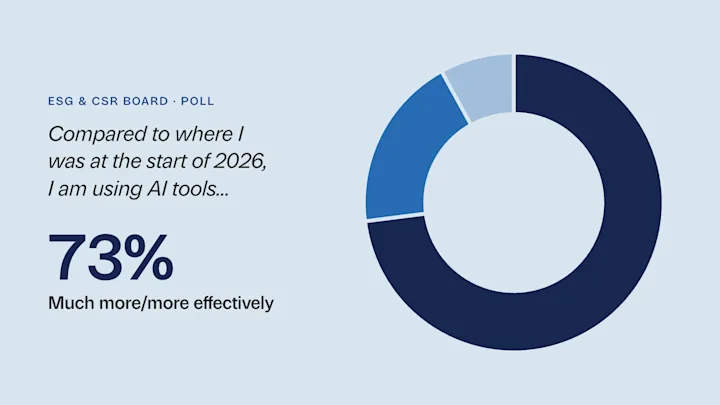
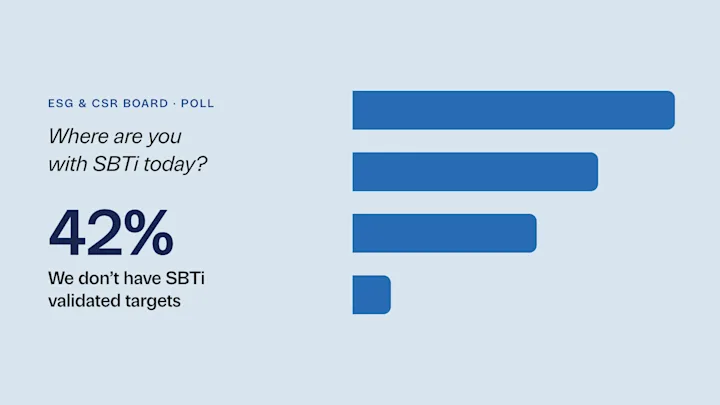
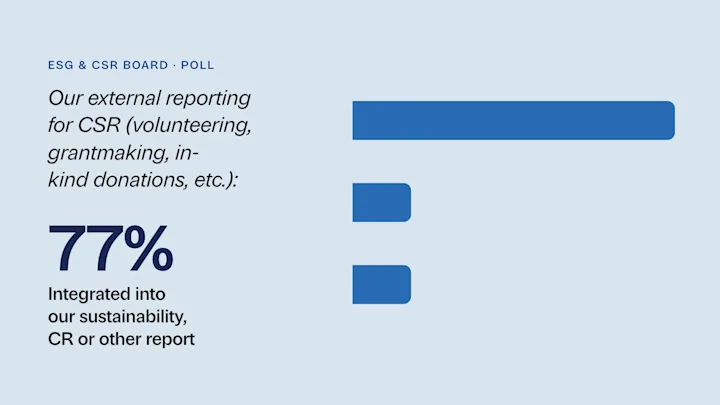
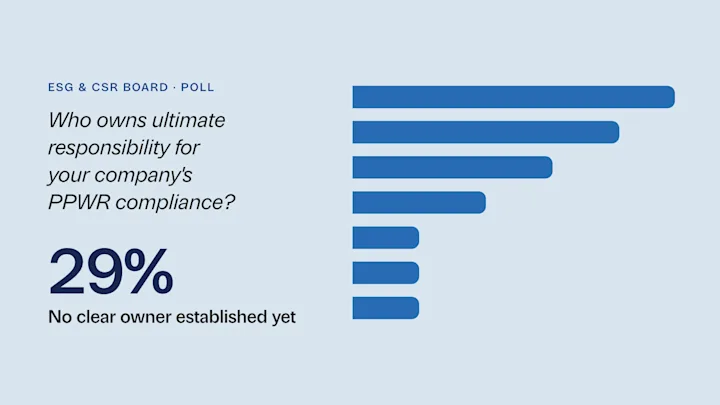
Poll results
Focus of the Discussion
PPWR's Requirements Are Outpacing Existing Ownership Structures
Readiness for the August requirements varied by packaging infrastructure and supplier visibility. Some companies closed documentation gaps through risk assessments and independent testing, while others were still tracking basic packaging information. Late clarification of manufacturer responsibilities created additional work, including revisions to declarations and packaging graphics.
Ownership remains difficult as PPWR spans chemical restrictions, documentation, packaging design, and recyclability. Some companies are dividing responsibilities by functional expertise, with ESG coordinating and operations executing. Others are integrating packaging into existing product quality and tracking systems. The challenge ahead is securing sustained accountability across functions as future requirements expand.
Key Takeaways
Assign ownership by requirement. Map PPWR obligations to the functions equipped to make the relevant decisions, including regulatory compliance, technical teams, operations, and ESG. Define who approves decisions, executes the work, and resolves disputes when responsibilities overlap. A functional split can make ownership more manageable, provided someone remains accountable for gaps between functions.
Set clear rules for supplier data gaps. Establish when missing documentation warrants additional outreach, internal risk assessment, or independent testing. One company used documented outreach and risk assessments to manage interim gaps, while another commissioned laboratory testing to avoid waiting on suppliers. Base the response on material risk and available evidence, with clear approval and recordkeeping requirements.
Build packaging data into existing workflows. Connect packaging materials, suppliers, and declarations to sourcing, product development, and compliance processes. Members are exploring automated declarations and consolidated documentation to reduce repeated manual collection. Prioritize systems that can accommodate future requirements without recreating records for every new obligation.
Recheck manufacturer responsibilities as guidance evolves. Regulatory interpretations can change documentation and labeling obligations even when packaging materials remain unchanged. Review responsibilities across relevant supply chain arrangements, particularly private-label and filled-packaging scenarios. Account for the additional time required to update packaging graphics and materials already in circulation.
Turn compliance urgency into lasting accountability. Market-access concerns helped one company mobilize operations, while another relied on customer documentation requests to secure supplier engagement. Use the business exposure that most directly supports internal action, then establish recurring responsibilities and escalation paths. Reassess those commitments as the 2028–2030 requirements begin affecting packaging design and product decisions.
About the ESG & CSR Board and Assemble
The ESG & CSR Board is an Assemble community that helps senior ESG, sustainability, and CSR leaders at the world's largest organizations make better, faster decisions through trusted peer intelligence.
We selectively share highlights from confidential member conversations to help leaders understand how peers are navigating complex workforce challenges and emerging opportunities.
If you'd like to learn more about the conversations happening inside our peer network, or how members connect with trusted peers to solve critical challenges, please contact us.