The Story in Brief

“The most useful next steps were already in the member stories. Sandra showed how demographic data and difficult questions can enter the process before decisions are final, while Amy and others shared concrete approaches to talent, trust, and employee experience; the opportunity is to make those examples easier for members to carry forward without turning them into prescriptions.”
Picking Up the Story
The Org Chart Changes Faster Than the Employee Experience
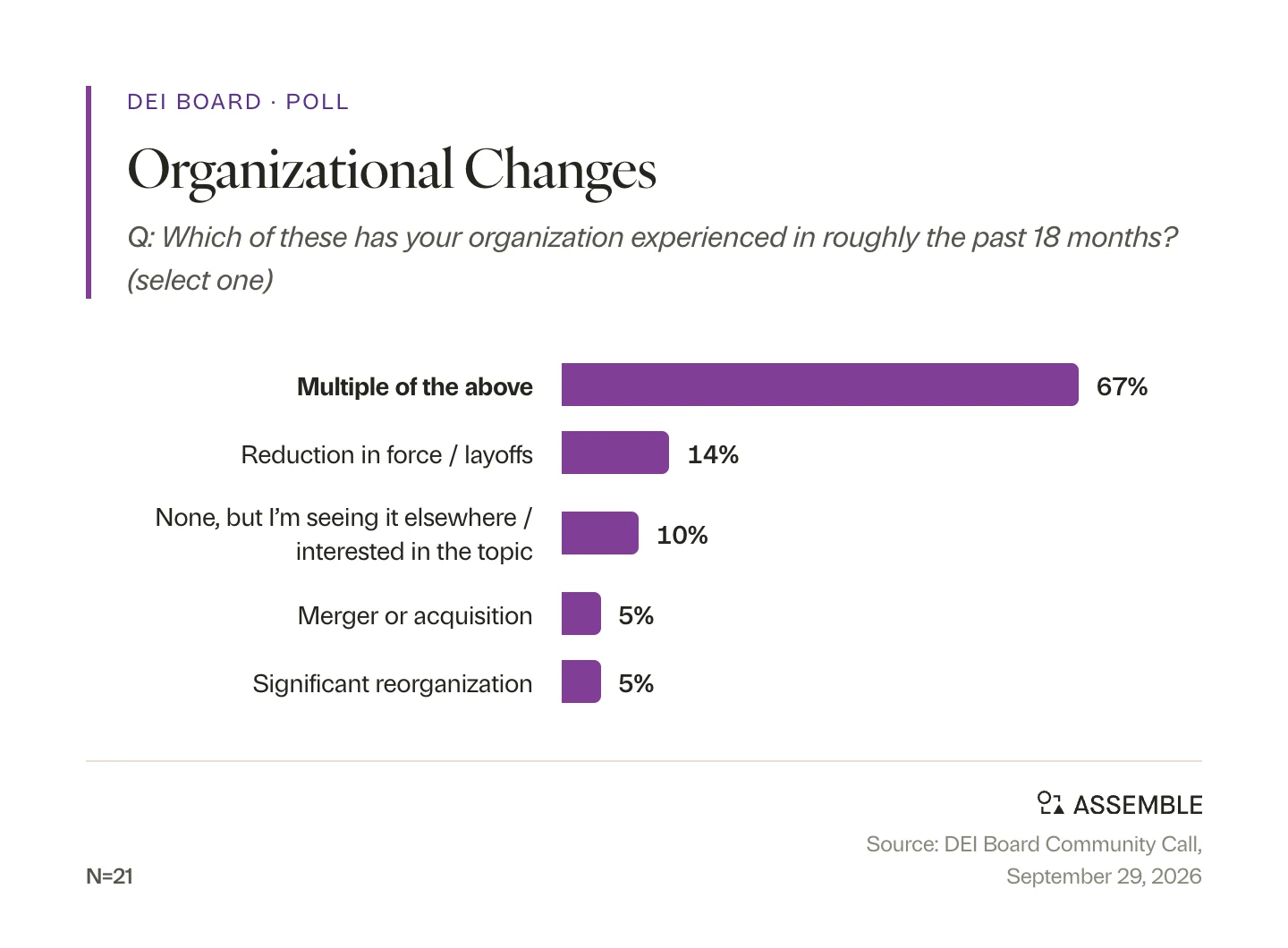
Layoffs, reorganizations, and mergers may have an official end date, while employees continue carrying the effects: lost colleagues, heavier workloads, uncertainty about future cuts, and questions about what the change means for them.
That aftermath brought DEI leaders together to examine what happens to trust, culture, belonging, and morale once the formal organizational change is underway or complete.
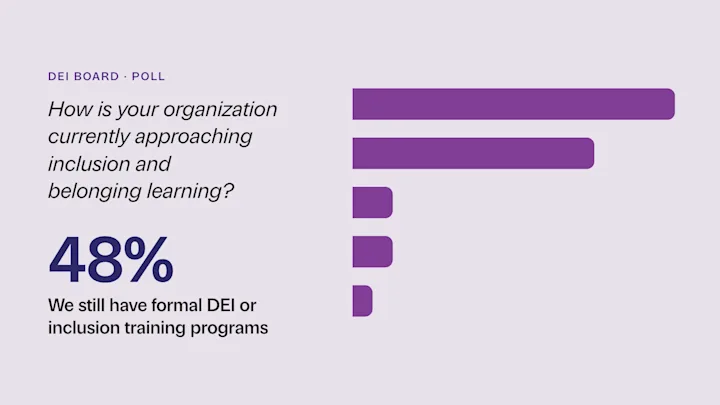
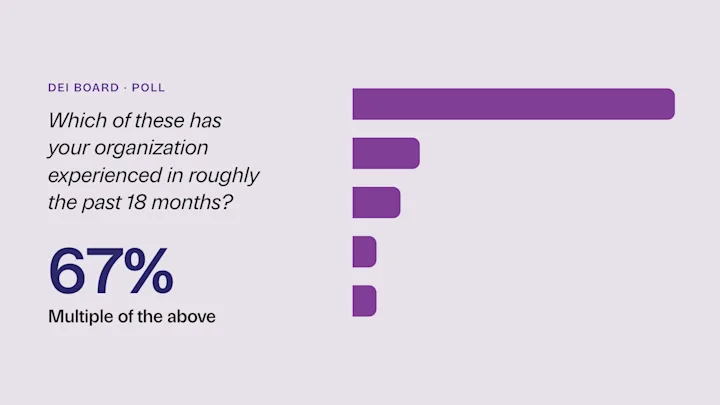
Poll results
Focus of the Discussion
The Workforce Decision Keeps Reverberating
Employees continued interpreting organizational change through what followed: additional cuts, unfilled roles, hiring elsewhere, heavier workloads, and shifting skill requirements. Those signals shaped trust, engagement, and employees’ confidence in what might come next.
DEI leaders saw opportunities on both sides of the decision. Earlier demographic review could surface patterns while plans were still taking shape; afterward, consistent leadership behavior, time to process, and attention to career resilience could support recovery. At the same time, DEI practitioners were often absorbing more responsibility as inclusion work competed for organizational attention.
Key Takeaways
Move demographic review upstream while workforce decisions can still change. Build review points into restructuring processes before selections become final, with HR partners prepared to question proposed decisions and examine patterns by demographic group and leader. Earlier visibility creates an opportunity to investigate disparities while there is still room to act on what the data shows.
Pressure-test the signals employees will receive after the announcement. Consider layoffs, subsequent cuts, hiring, backfills, workload changes, and new skill requirements as parts of the same employee experience. Looking across those decisions can help leaders anticipate where employees may see inconsistency and where additional context or leadership attention will be needed.
Rebuild trust through repeatable leadership behavior. Give employees time to process major change and hold leaders accountable for following through on commitments over time. Small opportunities for connection can support recovery, but consistency is what gives those efforts credibility.
Build career resilience before another workforce change puts it to the test. Examine whether employees have realistic pathways to their next role inside or outside the organization, especially where feeder pools or advancement opportunities are thin. School partnerships, professional networks, career-returner programs, and other targeted talent channels can strengthen mobility while addressing gaps exposed by restructuring.
Protect capacity for the people responsible for rebuilding belonging. Flag workload and ownership constraints early when DEI practitioners absorb additional responsibilities during a transformation. Allowing that capacity to erode can weaken ERG support, employee relationships, and the practitioner’s ability to influence the recovery when that influence is most needed.
About the DEI Board and Assemble
The DEI Board is an Assemble community that helps senior diversity, equity, inclusion, belonging, and culture leaders at the world's largest companies make better, faster decisions through trusted peer insights.
We selectively share highlights from confidential member conversations to help leaders understand how peers are navigating complex challenges and organizational change.
If you'd like to learn more about the conversations happening inside our peer network, or how members connect with trusted peers to solve critical challenges, please contact us.