The Story in Brief
“As AEO becomes real work for more teams, the resource question is getting more nuanced. The challenge is not simply whether to invest more, but where to invest first. Teams are trying to understand whether their next bottleneck is people, tools, analytics, content, technical expertise, agency support, or internal coordination before committing to a more permanent resourcing model.”
Picking Up the Story
From Experimentation to Operational Planning
As AEO moves from early experimentation into more serious planning conversations, organizations are beginning to ask practical questions about what it will take to support the work over time. Decisions around ownership, staffing, budgets, and operating models are becoming increasingly important, even as the discipline itself continues to evolve.
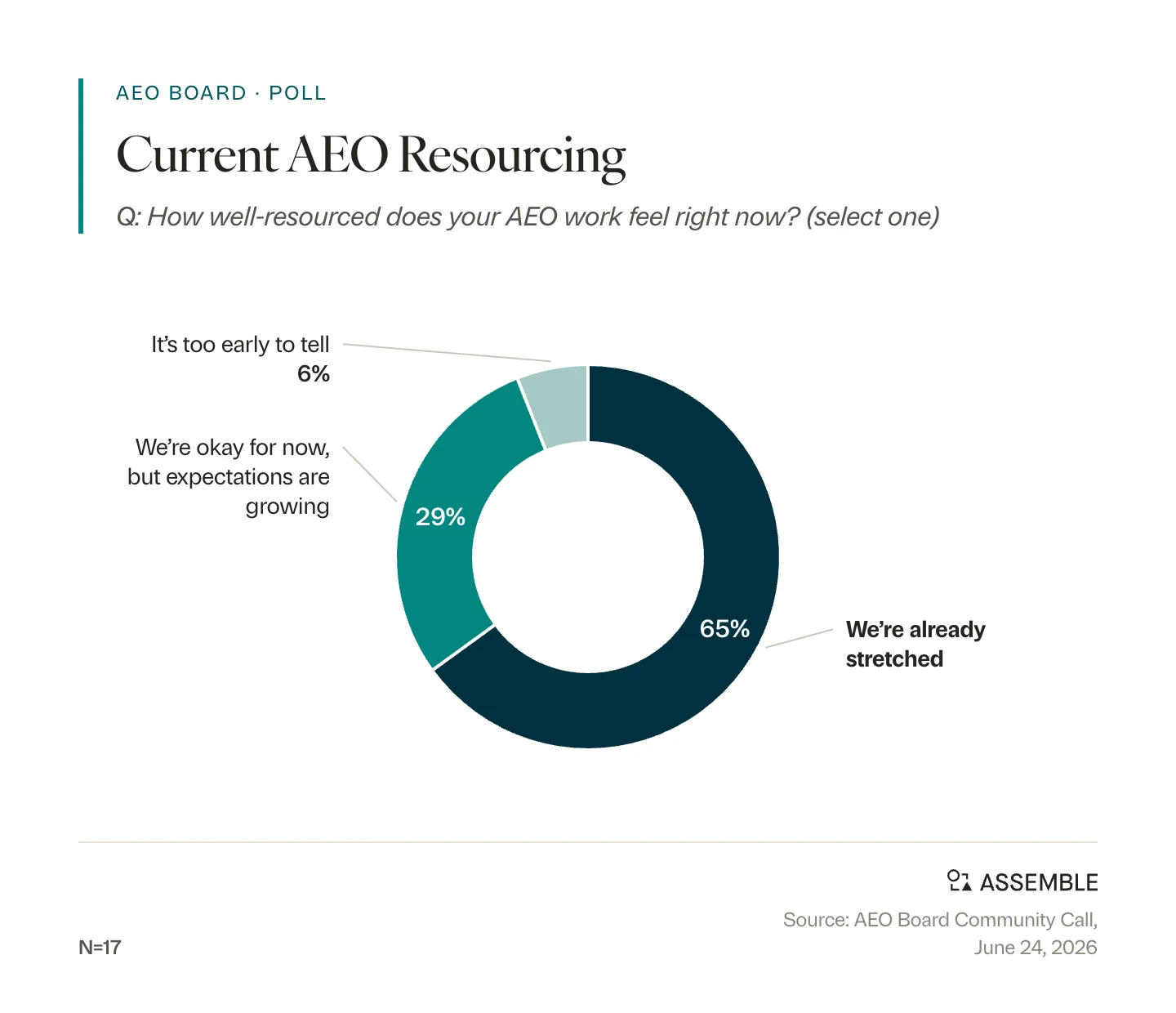
That uncertainty prompted this discussion: What does AEO actually require from a resourcing perspective, and how should organizations think about building support for the work as it matures?
“The immediate challenge is not just getting more — it’s knowing what ‘more’ should actually be.”
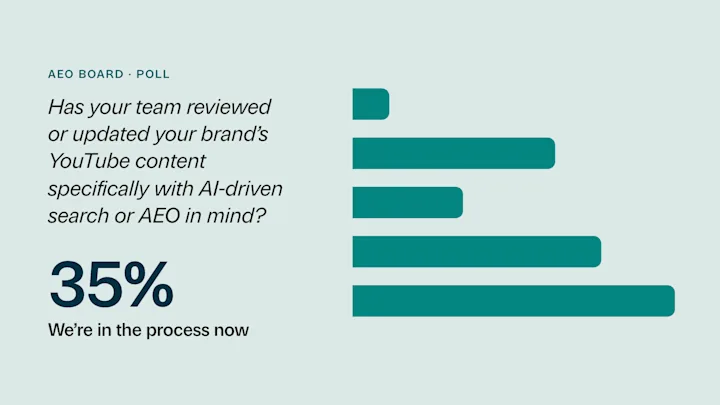
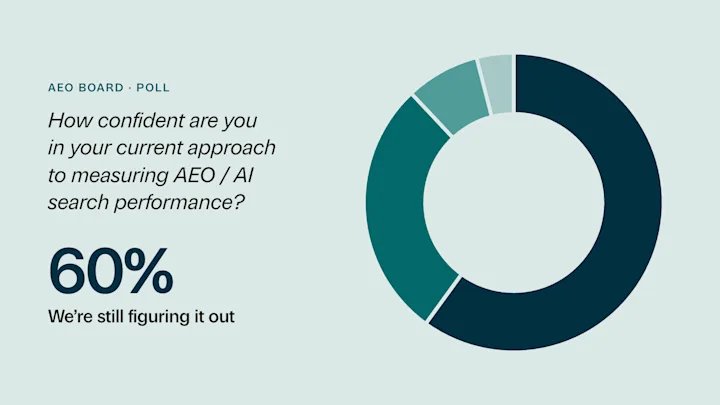
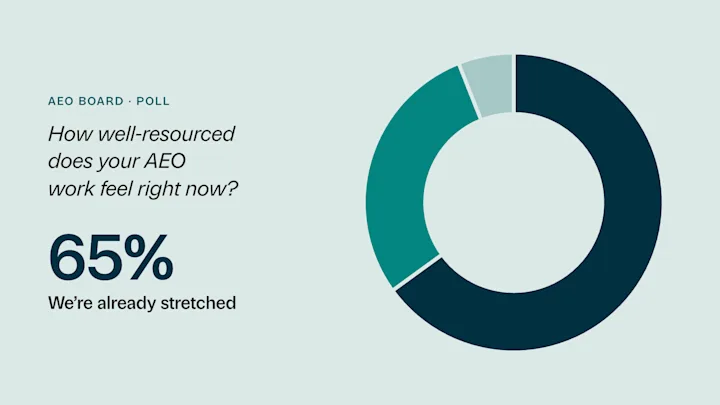
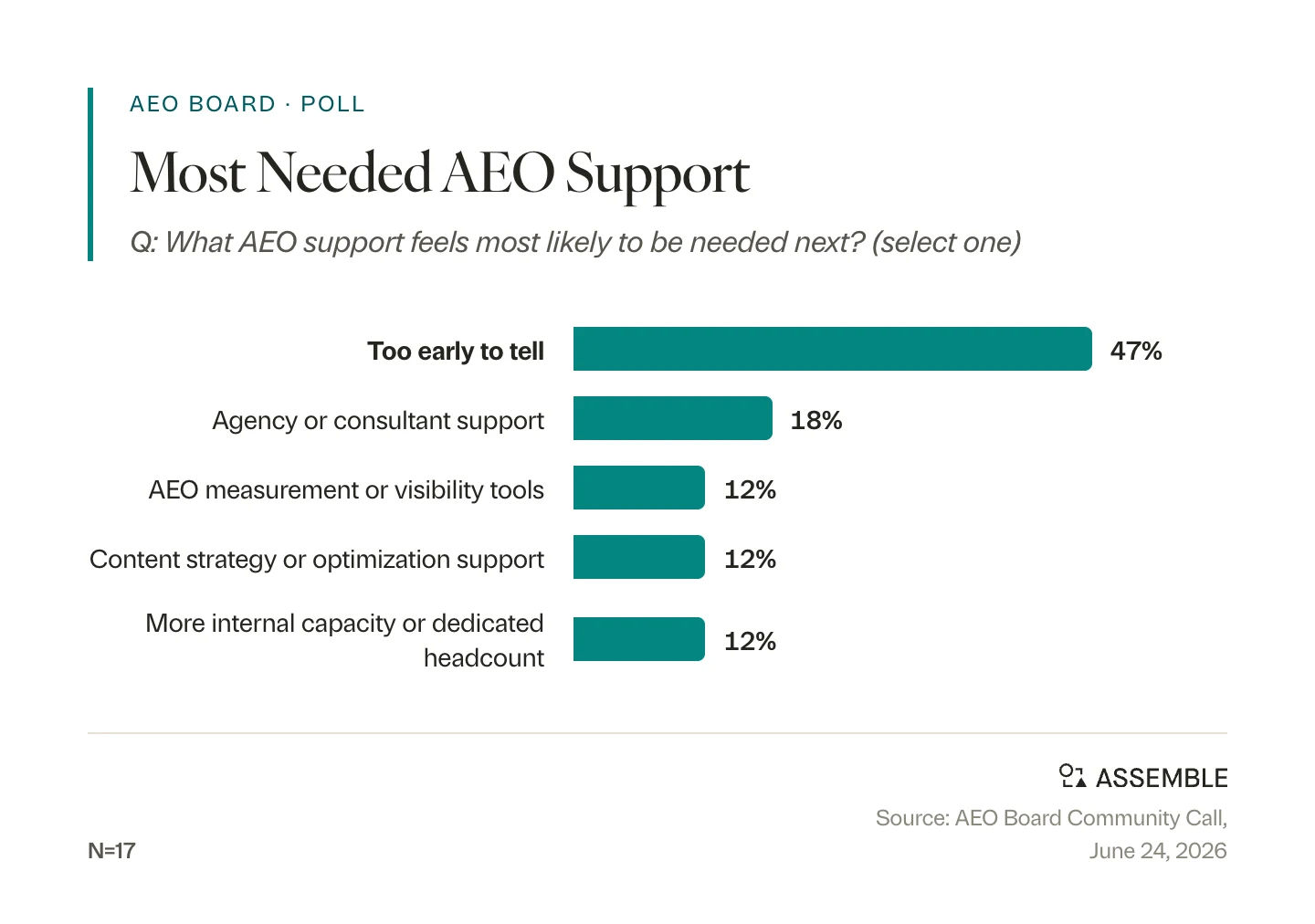
Poll results
Focus of the Discussion
Building an Operating Model While the Work Is Still Evolving
For many teams, AEO has reached the point where long-term support is becoming part of the conversation, even as they are still determining what the work will ultimately look like. Questions about ownership, technical expertise, content, analytics, and measurement remain in flux, making it difficult to define permanent roles or organizational structures.
That uncertainty is pushing many teams toward flexible operating models. Existing SEO, content, analytics, communications, and digital teams continue to share responsibility while companies learn where sustained effort will be required. Agencies and specialized tools can help fill targeted gaps, but some members emphasized the need to be thoughtful about what gets outsourced before the internal model is clear.
Key Takeaways
Sequence investments before scaling teams. Members aren’t assuming headcount is the next resource request; instead the best place to start is with the constraint. Whether the immediate need is better measurement, technical expertise, content capacity, or cross-functional support, clarifying the problem leads to stronger investment decisions and more defensible business cases.
Build capability while the function is still forming. Rather than assuming dedicated AEO specialists are the immediate next step, many organizations are developing expertise within existing SEO, content, marketing, and technical teams. That approach gives teams flexibility while the discipline continues to evolve and reduces the risk of building around roles that may quickly change.
Separate experimentation from ongoing operations. Distinguishing exploratory work from recurring responsibilities helps organizations decide what deserves long-term investment. That clarity makes it easier to prioritize resources, define ownership, and scale the work intentionally rather than reactively.
Leverage external support without creating dependency. Agencies, consultants, and tools can help teams move faster, but members raised caution around outsourcing before the scope is clear. Targeted support may be more useful than large, open-ended engagements while organizations are still determining what AEO will require internally.
About the AEO Board and Assemble
The AEO Board is an Assemble community that helps senior search, SEO, content, and digital marketing leaders at the world’s largest companies make better, faster decisions through trusted peer insights.
We selectively share highlights from confidential member conversations to help leaders understand how peers are navigating complex challenges and fast-moving changes in AI-driven discovery.
If you’d like to learn more about the conversations happening inside our peer network, or how members connect with trusted peers to solve critical challenges, please contact us.