The Story in Brief

“Many teams already have more AEO data than they can confidently act on. The real work now is creating consistency, agreeing on prompt strategy, validating metrics, and helping stakeholders understand which signals are directional and which are mature enough to inform decisions. That foundation will likely matter more than simply choosing the “right” tool.”
Picking Up the Story
Measuring AI Search Is Getting More Complicated
AI search is evolving quickly, and so are expectations around measuring its impact. New tools, expanding AI reporting from Google, and growing executive interest in AI search performance are pushing teams to establish meaningful ways to benchmark progress.
This conversation brought members together to compare how they’re approaching AEO performance measurement as expectations, reporting capabilities, and executive interest continue to grow.
“We’re at the stage where we’re triangulating the tools themselves to see which ones we feel tell the best story.”
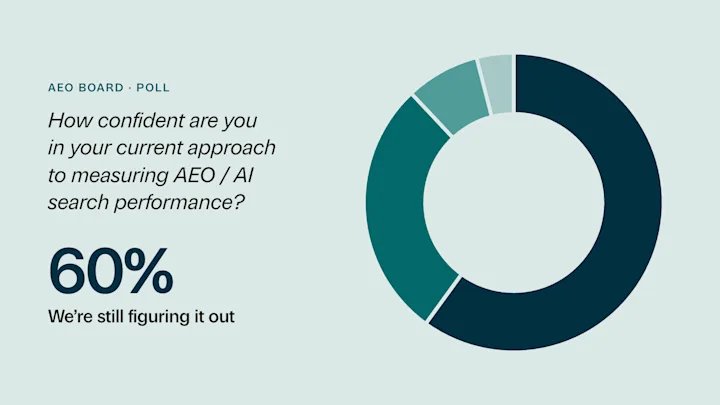
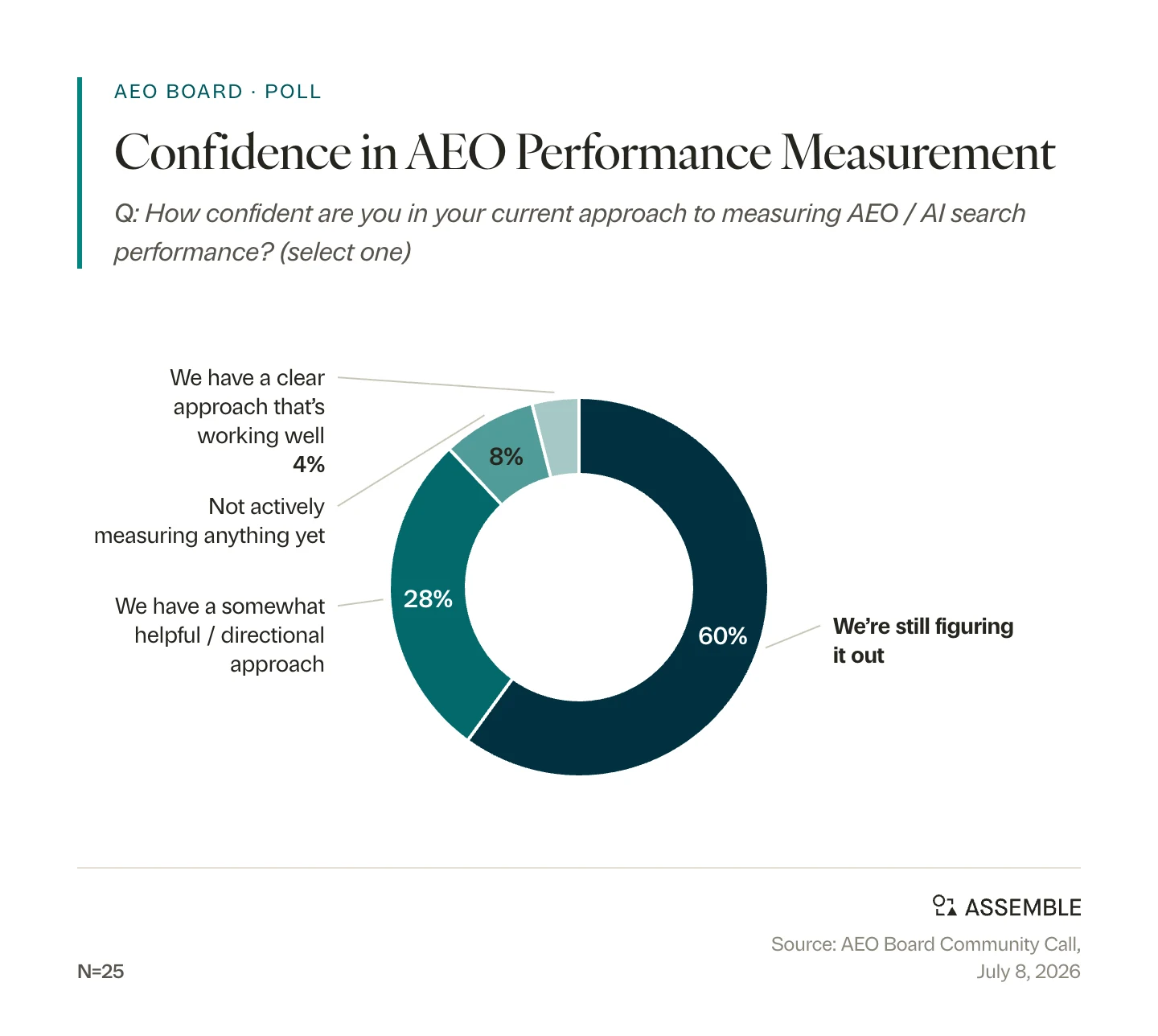
Poll results
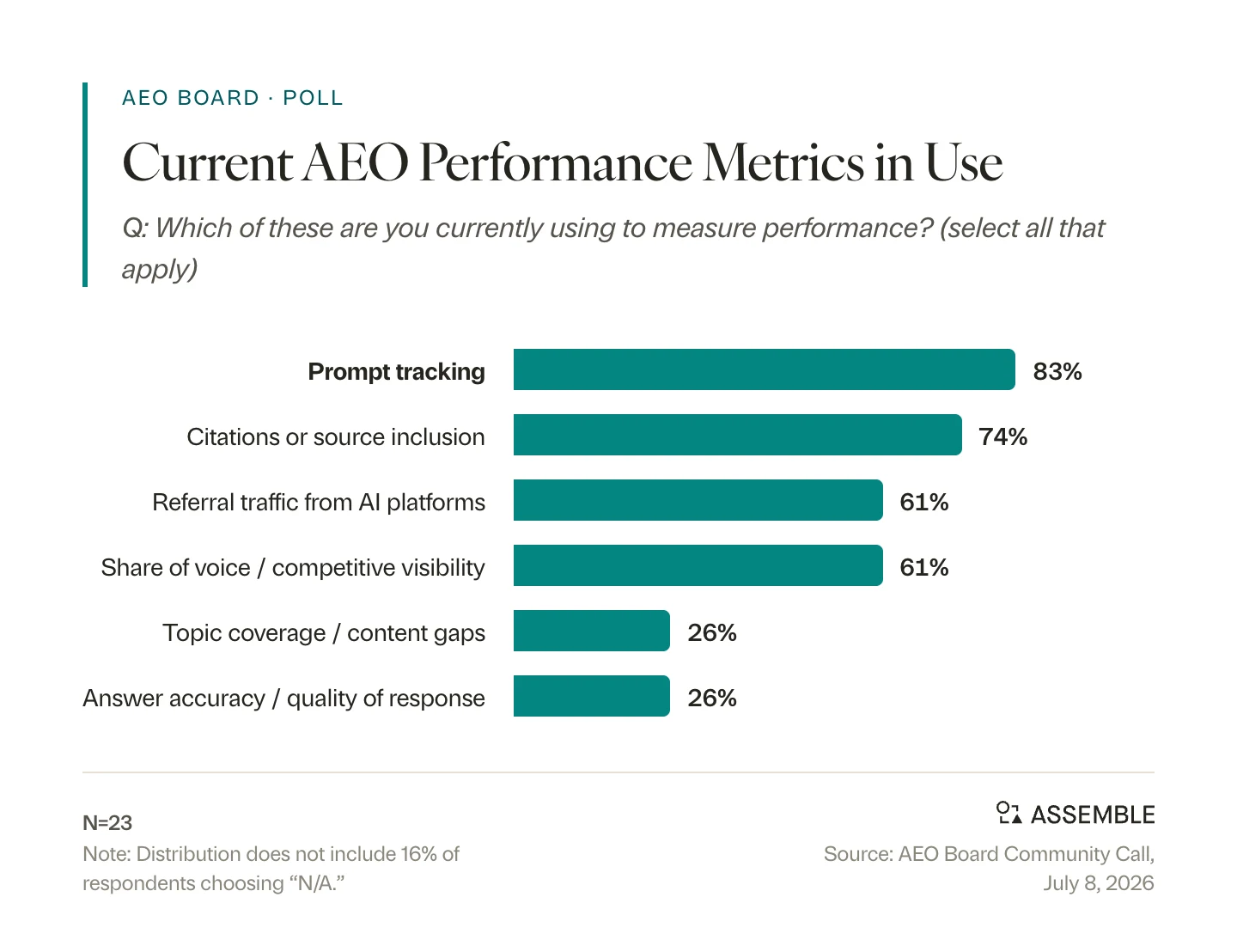
Focus of the Discussion
Building Measurement Leaders Can Trust
Teams are spending more time validating AEO measurement before expanding how it’s used internally. Rather than relying on a single platform, they’re comparing signals across tools, refining prompt strategies, and building shared measurement approaches before turning emerging metrics into executive reporting.
For some teams, AEO measurement is beginning to influence content priorities, source analysis, and cross-functional collaboration. Teams are using it to uncover content gaps, identify new optimization opportunities, and better understand competitive visibility while allowing reporting practices to mature alongside the data.
Key Takeaways
Match each metric to the decision it is meant to support. Organizations are becoming more deliberate about the role each AEO metric plays. Some signals are proving useful for testing ideas, identifying content opportunities, or tracking competitive trends, while others are beginning to inform executive reporting. Clarifying that purpose upfront helps teams move faster without creating false confidence in emerging measures.
Standardize prompt strategy to strengthen measurement. Teams are finding that consistent prompt libraries are foundational to consistent reporting. Aligning prompts across marketing, communications, SEO, and agency partners creates cleaner comparisons and makes measurement more credible as organizations scale their AEO programs.
Validate signals before turning them into organizational KPIs. Many teams continue comparing outputs across multiple platforms to understand where signals align and where methodologies differ. That validation process is helping organizations build confidence in their reporting while avoiding long-term dependence on metrics that may still evolve.
Use AEO measurement to guide prioritization. The strongest examples treated measurement as an input for prioritization. Teams are using emerging AEO signals to identify content gaps, uncover new customer questions, evaluate competitive visibility, and focus optimization efforts where they are most likely to have an impact.
About the AEO Board and Assemble
The AEO Board is an Assemble community that helps senior search, SEO, content, and digital marketing leaders at the world’s largest companies make better, faster decisions through trusted peer insights.
We selectively share highlights from confidential member conversations to help leaders understand how peers are navigating complex challenges and fast-moving changes in AI-driven discovery.
If you’d like to learn more about the conversations happening inside our peer network, or how members connect with trusted peers to solve critical challenges, please contact us.