The Story in Brief

“There’s a growing tension between what ESG leaders believe is worth the effort, and what the business requires. Even as some teams exit or reduce participation, many are still maintaining the same level of work, due to customer and sales demands. That gap is becoming one of the defining challenges in ratings strategy today.”
Picking Up the Story
A Push to Scale Back
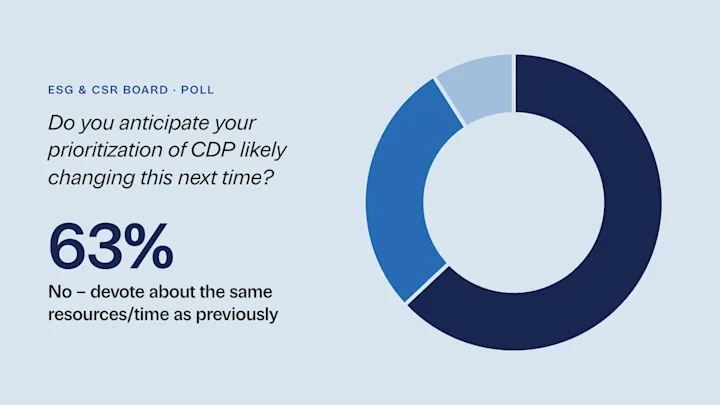
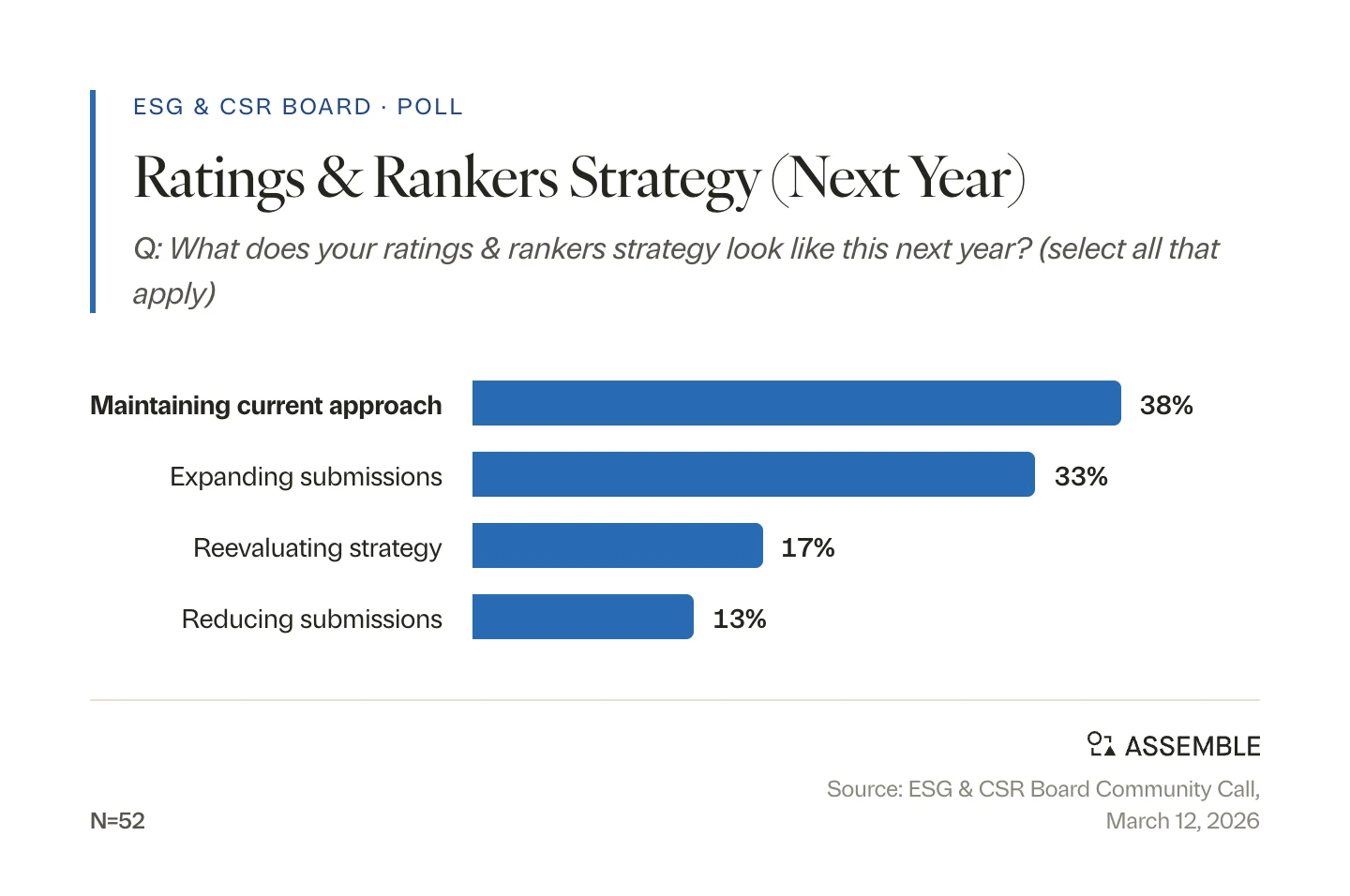
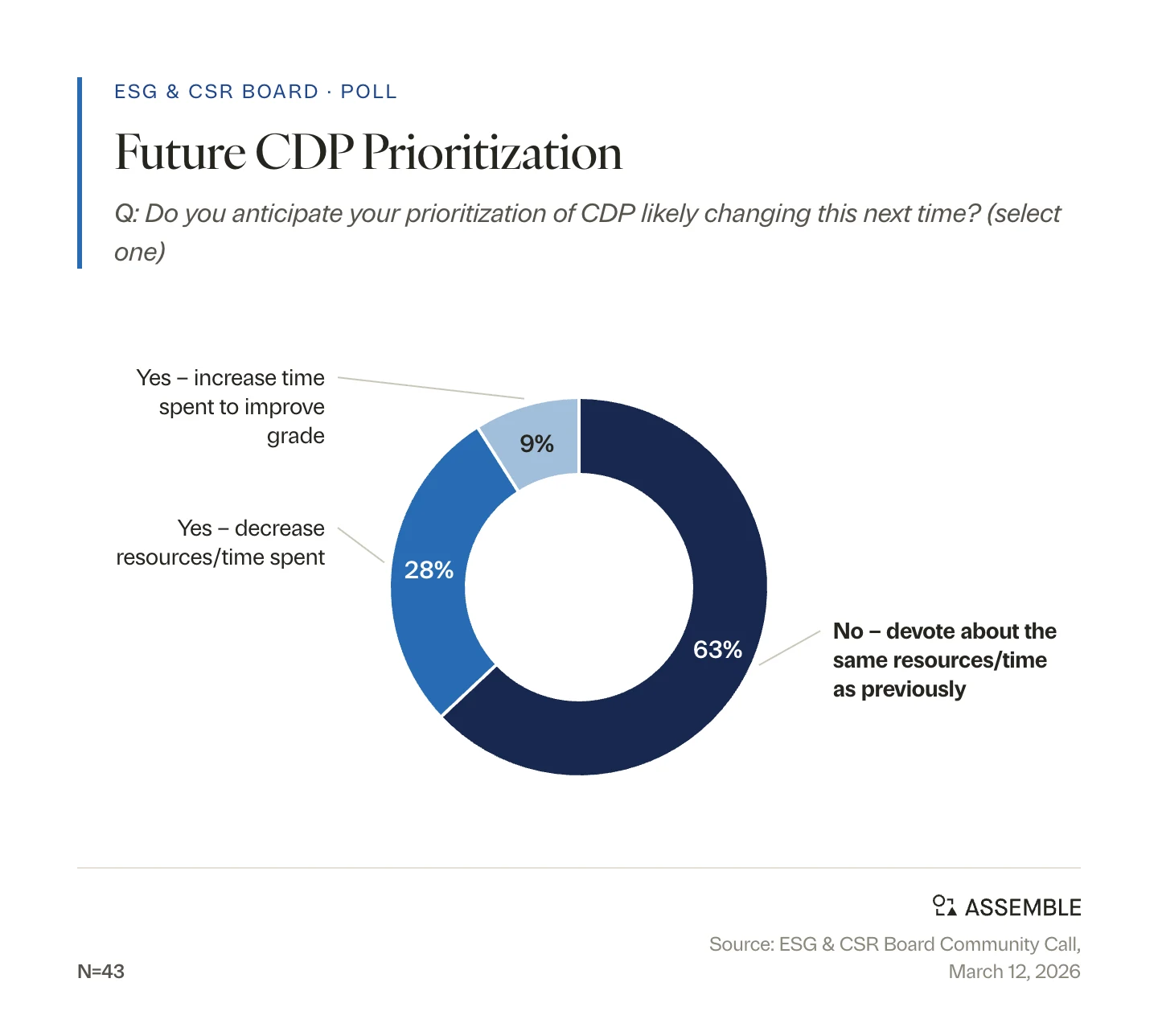
ESG teams are actively trying to reduce the time and resources spent on ratings and rankers, but many are finding they can’t. While 28% of organizations plan to decrease effort, 63% expect to maintain the same level of investment.
This dynamic is creating a major structural gap between strategy and execution. Members say customers are now the party most interested in ESG reporting.
“Outside of some of our bigger customers, I'm seeing less importance or interest in our ESG scores from our investors.”
“It's a gold star for participation, but they're not using the data.”
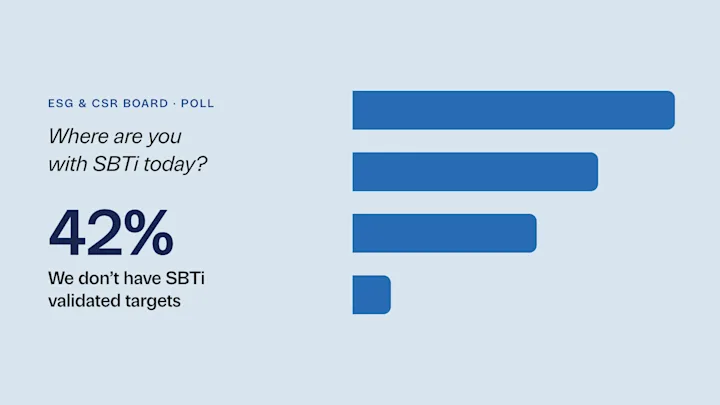
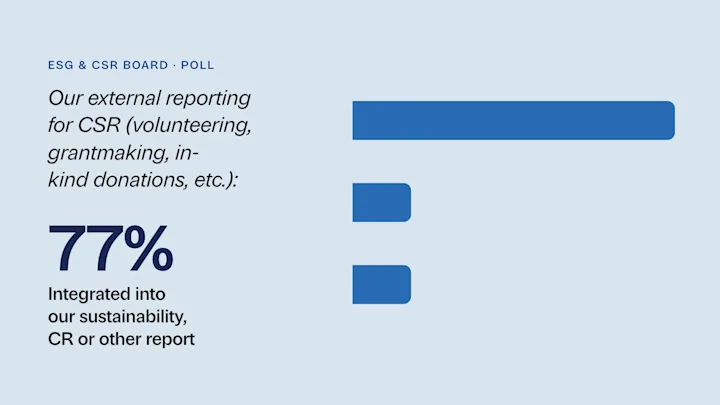
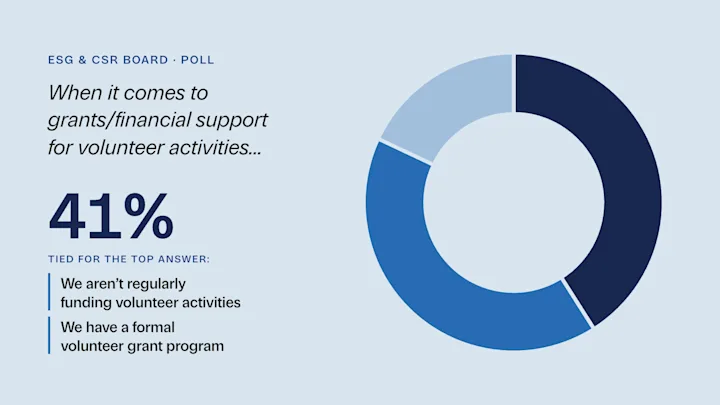
Poll results
Focus of the Discussion
ESG Reporting Is Being Repurposed, Not Reduced
Companies want to do less ESG reporting, but are often still doing the same amount of work.
This is most visible in CDP. Some leaders see participation as symbolic rather than decision-driving. At the same time, investor pressure is fragmenting, and in some cases declining. As one participant put it, “We have not had an investor call on ESG since 2023.”
But stepping back is not straightforward, because the pressure has shifted. Customers are now a primary driver of reporting strategy, creating a structural constraint: Organizations may want to rationalize, but cannot fully disengage without risking revenue impact. The result is a fragmented strategy landscape, where leaders are optimizing at the margins, but not fundamentally reducing the system.
Key Takeaways
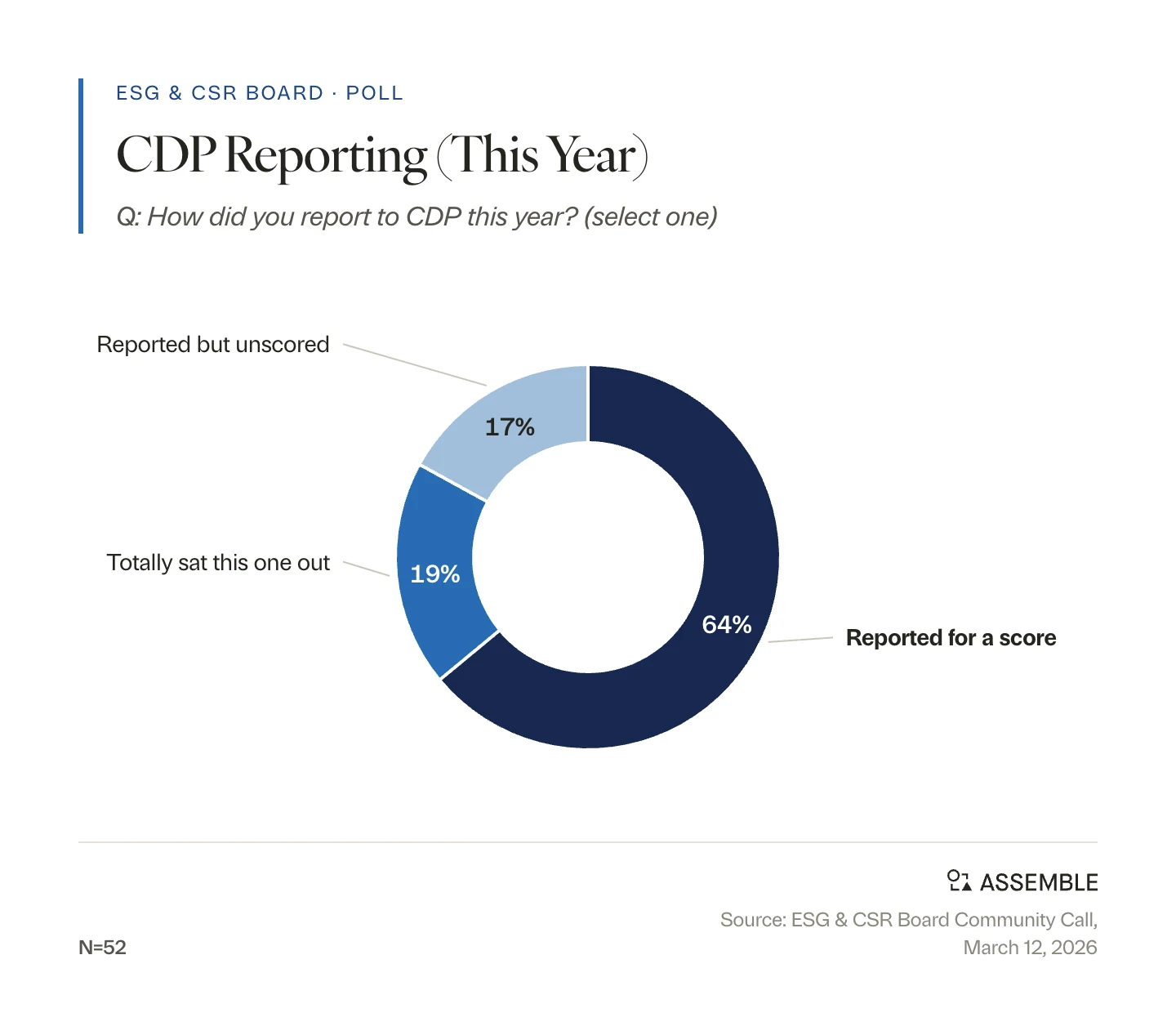
Several members described formal efforts to reassess where time and effort are truly warranted, often engaging Investor Relations and capital markets teams to prioritize the ratings that matter most. Some have moved from scored to unscored CDP submissions, or stopped actively trying to improve scores, in some cases reporting that they cut their time investment in half. But poll results show that most are still maintaining similar levels of effort year over year. Members cautioned that sales teams often advocate broad participation due to customer requests, reinforcing how hard it is to fully step back.
Investor pressure on ratings is shifting, and it’s not evenly distributed. Members described European investors as consistently engaged on ESG ratings, while U.S. investors have pulled back. Conversations have shifted toward topics like AI, tariffs, and geopolitical uncertainty instead. Members emphasized the importance of directly asking investors which ratings truly influence their decisions rather than assuming continued relevance.
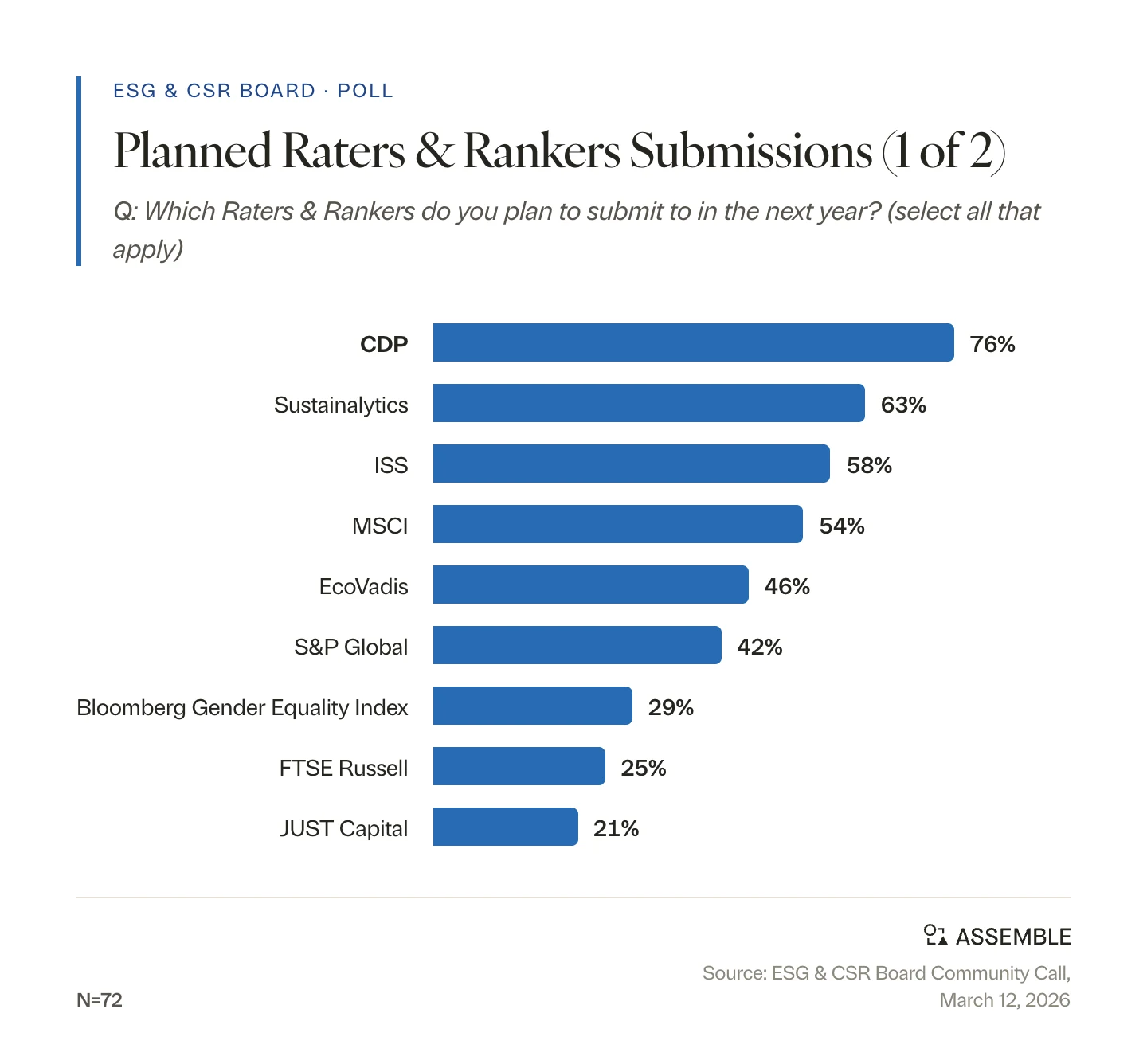
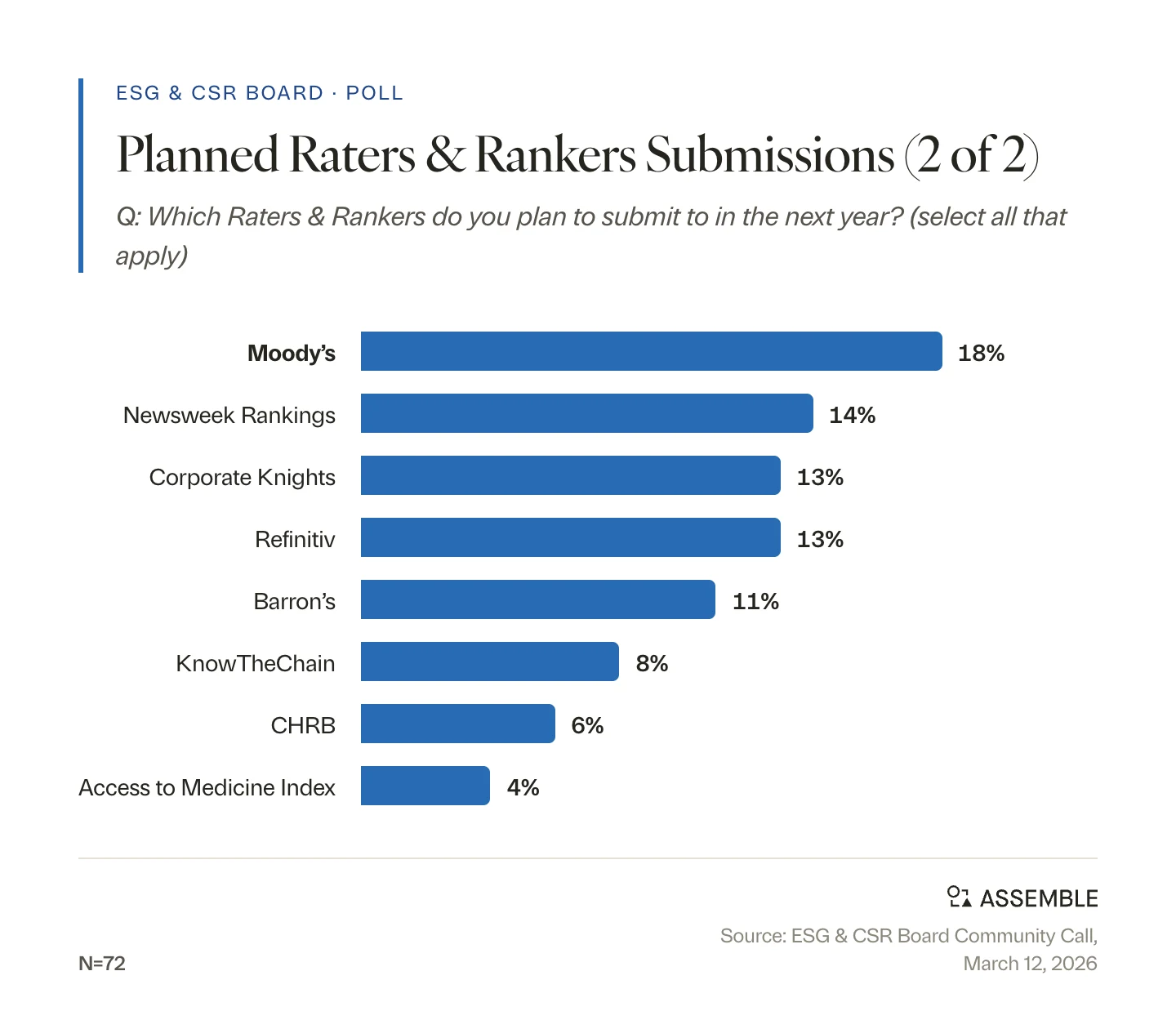
Customer demand, particularly around EcoVadis, is increasingly shaping strategy. Multiple members said customer pressure now rivals or exceeds investor pressure in determining where to invest reporting resources. EcoVadis surfaced repeatedly as a priority, especially in European and UK markets, and in supply chain contexts where procurement teams rely on it for screening. Some organizations are responding to investor or customer surveys only with publicly available data, while others are prioritizing raters explicitly requested in tenders.
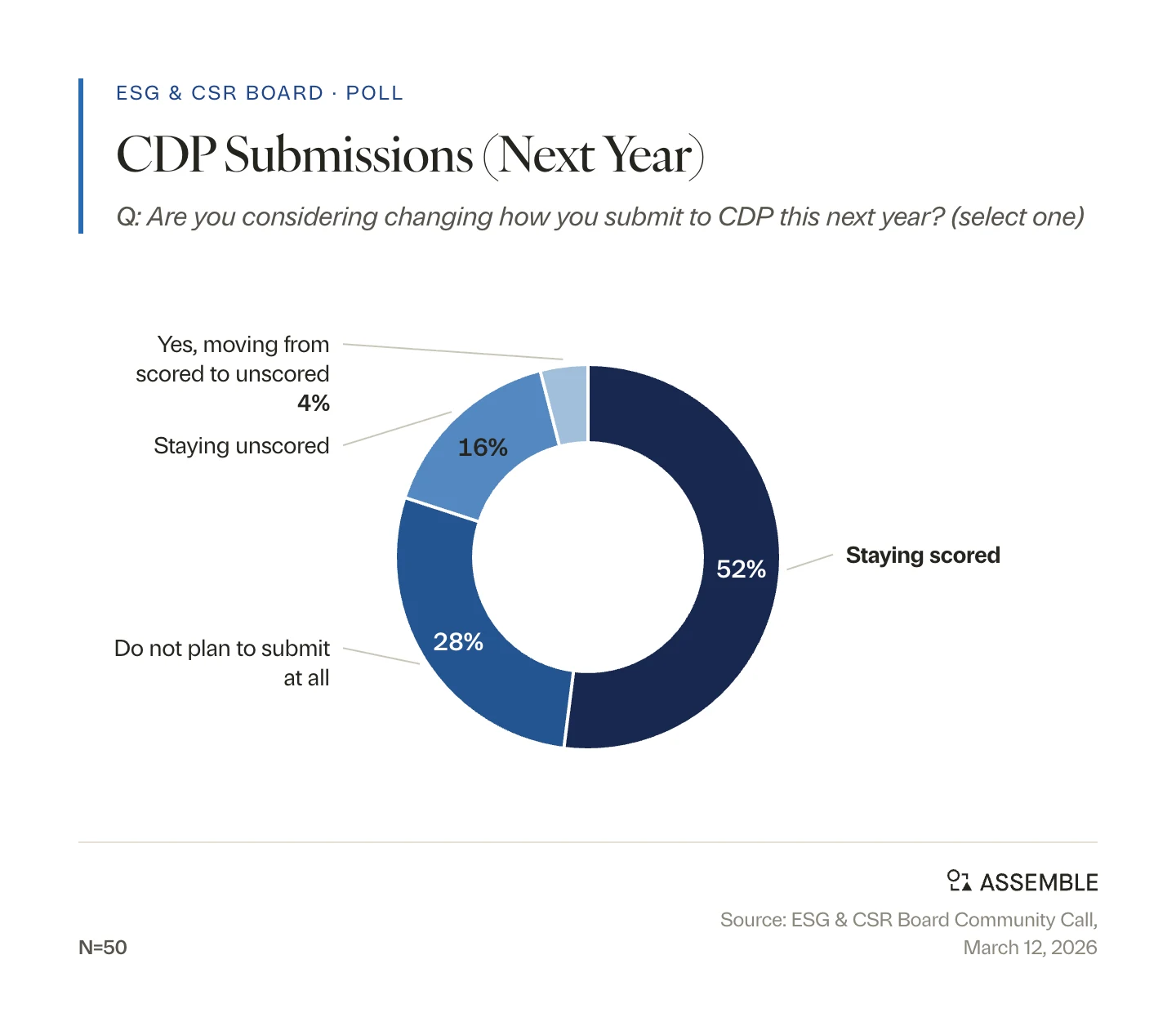
CDP participation is beginning to split, with a notable share of companies reconsidering their level of engagement. While most members reported submitting for a score this year, 28% said they do not plan to submit next year. Another 20% are either staying unscored, or considering a shift away from scoring. Some plan to continue responding, but with less emphasis on improving their grade. Members who have stepped back described minimal downside, while others remain engaged largely due to customer expectations rather than investor pressure.
About the ESG & CSR Board and Assemble
The ESG & CSR Board is an Assemble community that helps senior ESG, sustainability, and CSR leaders at the world's largest organizations make better, faster decisions through trusted peer intelligence.
We selectively share highlights from confidential member conversations to help leaders understand how peers are navigating complex workforce challenges and emerging opportunities.
If you'd like to learn more about the conversations happening inside our peer network, or how members connect with trusted peers to solve critical challenges, please contact us.