The Story in Brief

“AI governance is becoming less about evaluating new vendors and more about managing continuous change within existing ones. That shift is putting pressure on privacy teams, as traditional processes struggle to keep pace with the volume and speed of AI adoption. The result is a growing need to rethink how governance is structured and resourced.”
Picking Up the Story
Managing AI Systems and Refining Governance
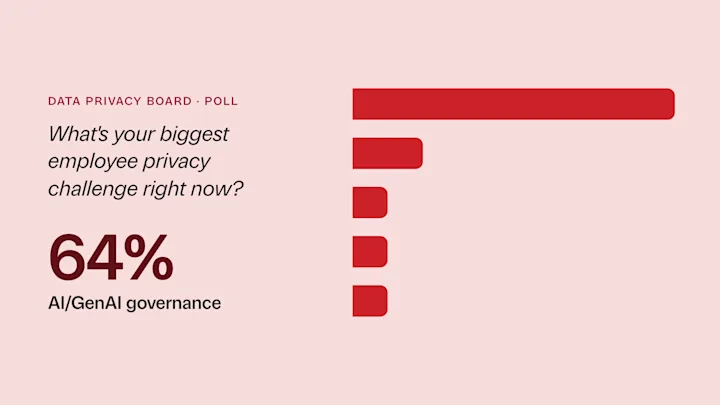
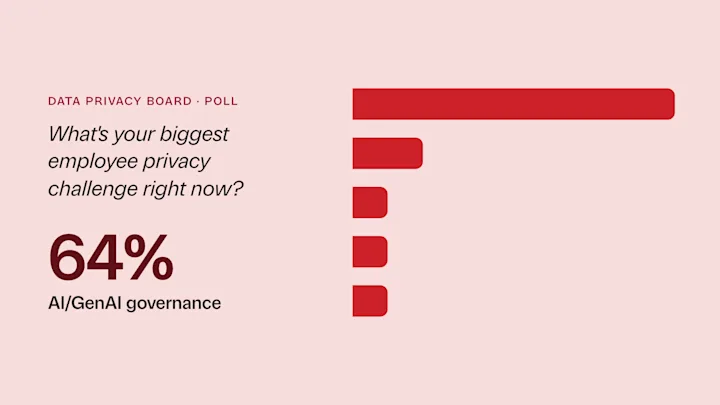
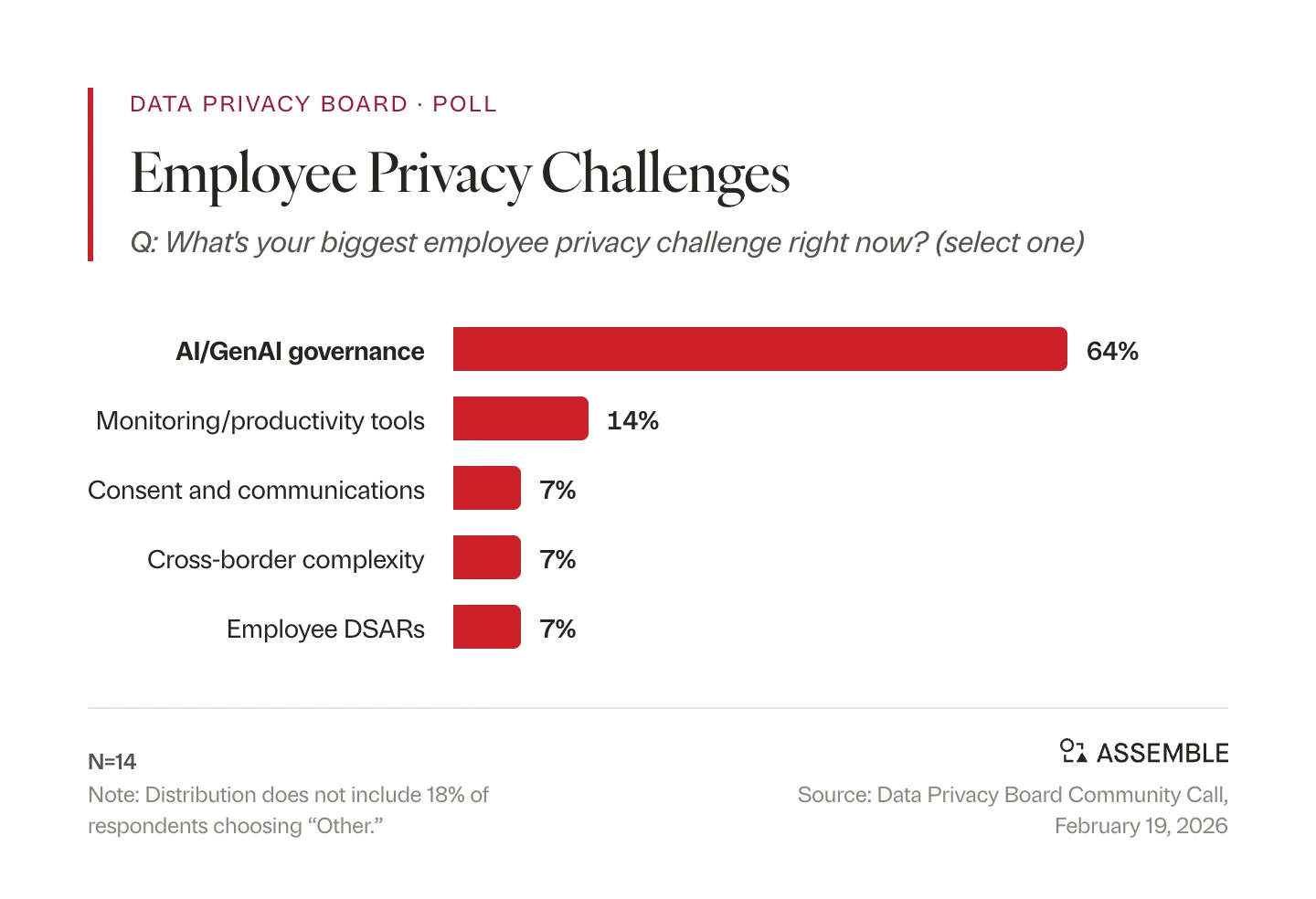
AI is no longer an emerging concern in employee privacy — it’s the primary one. With 64% of leaders pointing to AI governance as their top challenge, attention has shifted from whether to adopt AI to how to manage it responsibly.
Each update introduces new considerations around data use, employee privacy, and risk exposure, increasing the workload on privacy teams, without a clear endpoint.
“I think it's that tension between speed, governance, innovation, not stifling innovation.”
Poll results
Focus of the Discussion
Existing Vendors Add AI Capabilities, Privacy Teams Adjust Approval
AI adoption is accelerating faster than privacy governance can keep up.
Most of that growth is not coming from new tools, but from existing vendors embedding AI into platforms that organizations already use. This dynamic is creating an immediate operational burden and forcing trade-offs, particularly around negotiations and compliance planning. As one member put it, “Not all the regulators are moving at the same pace, and, equally, not all partners are working at the same pace.”
Privacy teams are being asked to govern technologies and use cases that are evolving faster than policies, standards, or regulatory guidance can define.
Key Takeaways
AI governance is quickly becoming part of the day-to-day reality of employee privacy, and many teams are feeling the strain. Several members described a noticeable uptick in AI-enabled tools entering their review queues, often through existing vendors adding new AI features rather than through entirely new providers. That shift is prompting contract amendments, AI addenda, and fresh assessments of tools that had already been vetted under more traditional frameworks. A few leaders noted that internal adoption, particularly for employee-facing use cases, has picked up in recent months.
Risk tolerance around employee data and AI appears to be shifting for many leaders. Several members described a gradual but noticeable change in executive appetite for innovation, with privacy teams adjusting their tone compared to even a year ago. Ideas that may have felt too risky 12–18 months back are now being revisited in the context of competitive pressure and cost efficiency goals.
Several members are leaning toward a global employee privacy notice with local addenda, though it’s not without friction. Leaders shared that they maintain a single global baseline notice, supplemented by jurisdiction-specific addenda, most often for California, UK, Singapore and other jurisdictions. Distribution is typically woven into existing internal systems, such as HRIS acknowledgments, employee handbooks, or intranet sites, with formal annual reviews and interim updates prompted by DPIAs or new processing activities. Translation continues to be a practical constraint, and some organizations limit updates to a core set of languages to keep the process manageable.
Employee DSAR volumes remain manageable, but complexity tends to spike when requests are tied to disputes or litigation. Most members reported relatively low volumes of employee DSARs, often fewer than a handful per month, with more activity coming from applicants than current employees. Because volume is low, several teams handle requests case by case, rather than building highly automated workflows. In some cases, especially in the UK, DSARs start to feel less like standard access requests and more like pre-litigation discovery.
Some members are beginning to explore what “digital employees” and agent governance could mean for workforce privacy oversight. The group discussed early experimentation with AI agents embedded into organizational structures, including examples of companies listing autonomous agents on org charts and assigning them to directors. This introduces new questions around accountability, visibility, and whether privacy notices and governance frameworks should explicitly address digital workers. Several members described the shift as both surprising and, in some cases, a practical response to how quickly automation is becoming part of everyday operations.
About the Data Privacy Board and Assemble
The Data Privacy Board is an Assemble community that helps senior privacy, compliance, governance, and data protection leaders at the world's largest organizations make better, faster decisions through trusted peer insights.
We selectively share highlights from confidential member conversations to help leaders understand how peers are navigating complex challenges and fast-moving, high-stakes moments.
If you'd like to learn more about the conversations happening inside our peer network, or how members connect with trusted peers to solve critical challenges, please contact us.