The Story in Brief

“One of the biggest takeaways was how many practical protections came from relatively small changes. Defining what actually warrants an after-hours interruption, filtering difficult content, protecting PTO, and giving people permission to step away can make the work more manageable without requiring a formal wellness program. The examples members shared showed how simple changes can produce noticeable results.”
Picking Up the Story
Small Changes Are Making Difficult Work More Sustainable
For social media teams, absorbing negativity is part of the job. But the mental toll of that exposure is often invisible to colleagues and leadership, leaving community managers to shoulder emotional demands that few other functions encounter.
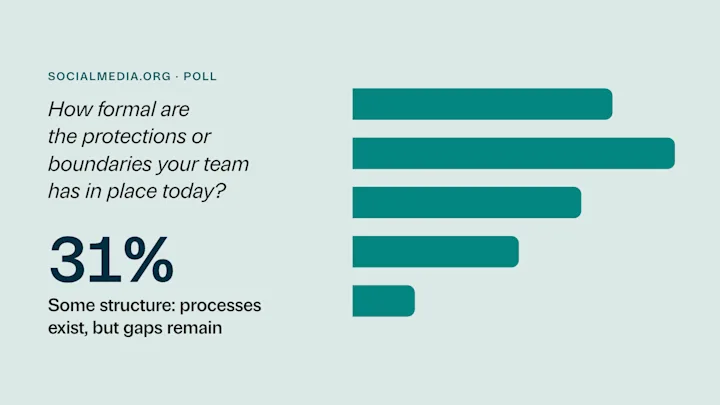
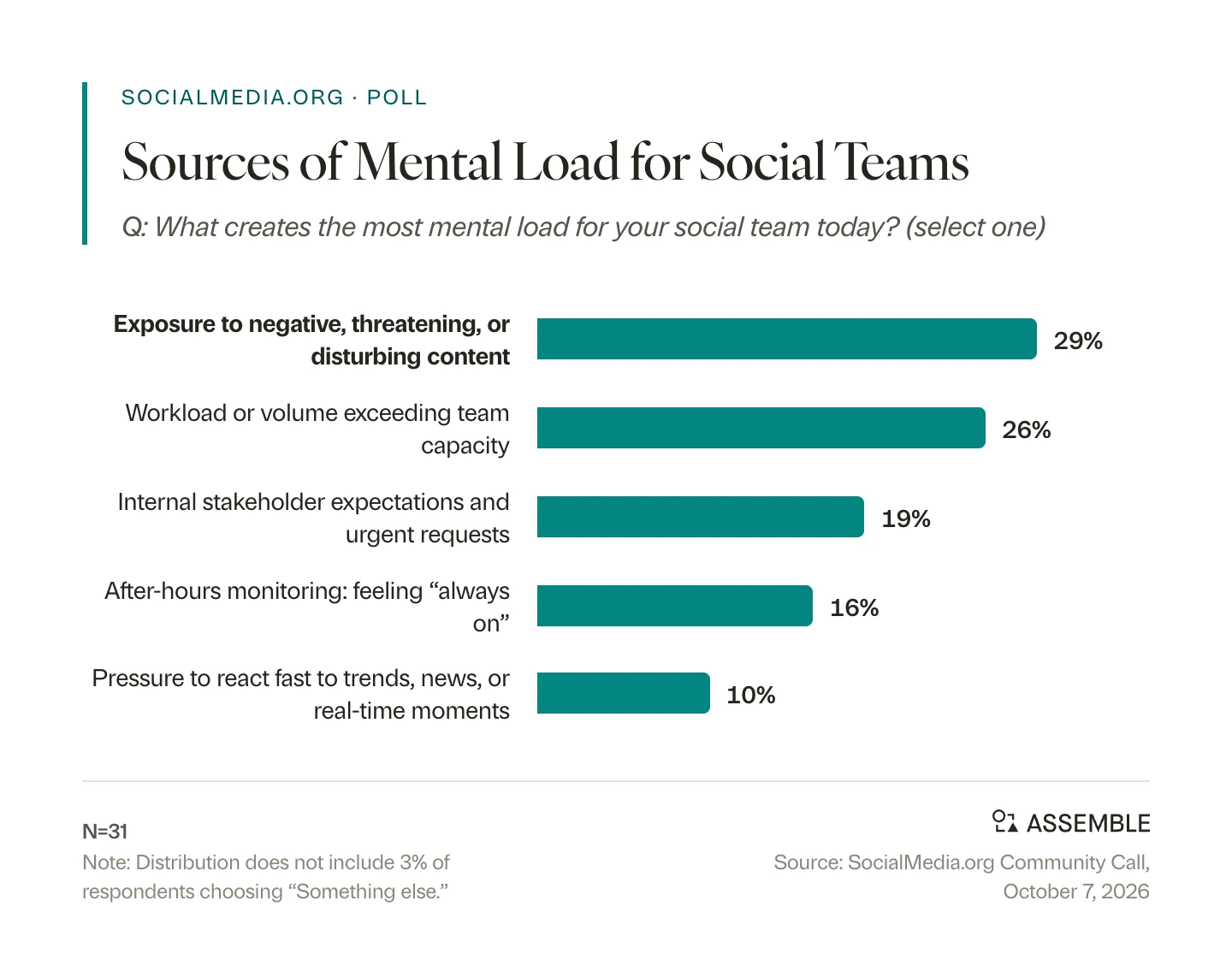
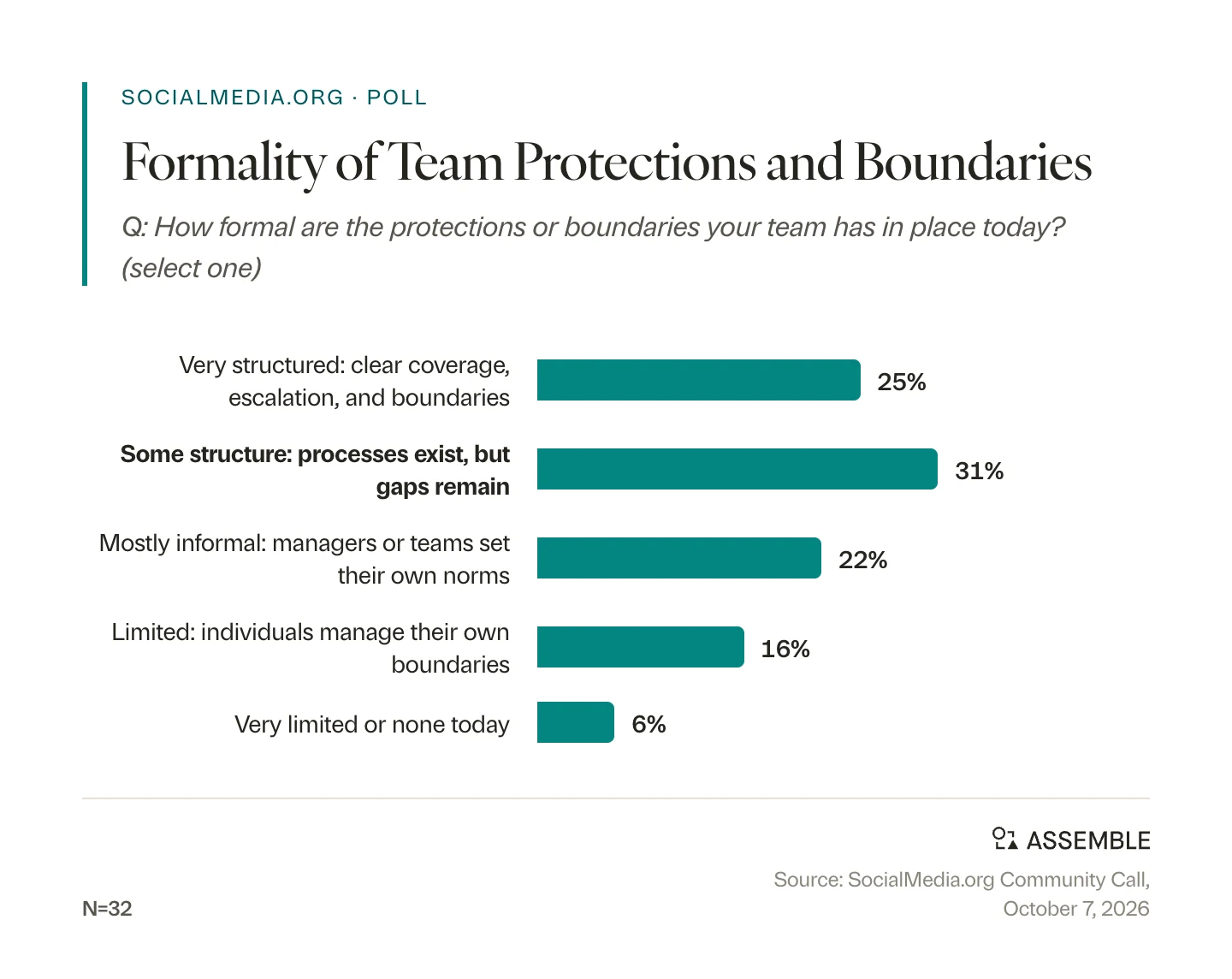
In the member poll, 28% identified negative, threatening, or disturbing content as their team's biggest source of mental load. Another 25% cited workload exceeding capacity. Yet only 25% reported having highly structured protections, while 44% described mostly informal, limited, or nonexistent safeguards.
The discussion surfaced practical ways to close that gap. Members are finding that clearer escalation rules, more deliberate coverage, and small changes to daily engagement can provide relief without requiring sweeping new programs.
“We're not communications robots. We are affected by everything that's happening.”
Poll results
Focus of the Discussion
Making Protection Part of the Operating Model
Members described how constant exposure to complaints and disturbing content takes a toll, particularly when colleagues outside social rarely see what community managers encounter. Yet practical protections don't always require major investments. One leader established an after-hours message requiring colleagues to call for genuinely urgent matters, receiving just one call in six years. Others are rotating weekend coverage, filtering disturbing content, protecting PTO, and humanizing customer interactions through personalized responses.
Still, staffing and leadership support shape how sustainable these practices can be. One member's community management team expanded from one person to six, creating room to establish standards and experiment, while others described reductions and limited recognition. To build visibility, one leader now highlights the team's workload in existing cross-functional meetings, including more than 7,500 cases handled in a single month. These examples show how clearer boundaries and greater leadership awareness can help protect teams without requiring sweeping new programs.
Key Takeaways
Redefine urgency before it becomes an after-hours obligation. One leader requires colleagues to call when an issue genuinely warrants an interruption, receiving just one call in six years. Others use rotating weekend coverage, automated responses, and external partners to maintain escalation paths without requiring everyone to stay connected.
Reduce unnecessary exposure to disturbing content. Members are filtering difficult material from daily feeds and allowing employees to prepare before reviewing it for reporting. Some leaders personally handle sensitive reputation monitoring to protect junior colleagues, while others explicitly support stepping away when exposure becomes overwhelming.
Rebalance reactive work with opportunities for positive engagement. Teams are incorporating proactive comments, recognition rituals, and lighter moments into community management. One team began using fictional first names in customer responses and received personalized thank-yous it hadn't seen before, showing how small changes can improve the experience on both sides of the interaction.
Make invisible labor visible in existing leadership conversations. One member uses routine cross-functional reporting to highlight community management volume alongside business results, including more than 7,500 cases handled in a single month. Sharing workload, difficult interactions, and team contributions gives decision-makers a clearer picture of the resources and protections the function requires.
Embed permission to disconnect into everyday management practices. Members are removing employees from escalation chats during PTO, protecting scheduled time away, and having leaders step in when coverage breaks down. These practices make boundaries operational rather than leaving individual employees to enforce them.
About SocialMedia.org and Assemble
SocialMedia.org is an Assemble community that helps senior social media leaders at the world's largest companies make better, faster decisions through trusted peer insights.
We selectively share highlights from confidential member conversations to help leaders understand how peers are navigating complex challenges and fast-moving decisions.
If you'd like to learn more about the conversations happening inside our peer network, or how members connect with trusted peers to solve critical challenges, please contact us.