The Story in Brief

“Facebook still delivers, but in very specific ways: paid media and human-centered storytelling. What stood out is how many teams are operating with new constraints, like less tracking, less visibility for links, and more pressure to prove performance. Everything else is becoming harder to justify, measure, or scale in the same way it once was.”
Picking Up the Story
On Facebook, Storytelling Is King
Hospitals are continuing to invest in Facebook, but their strategy is shifting.
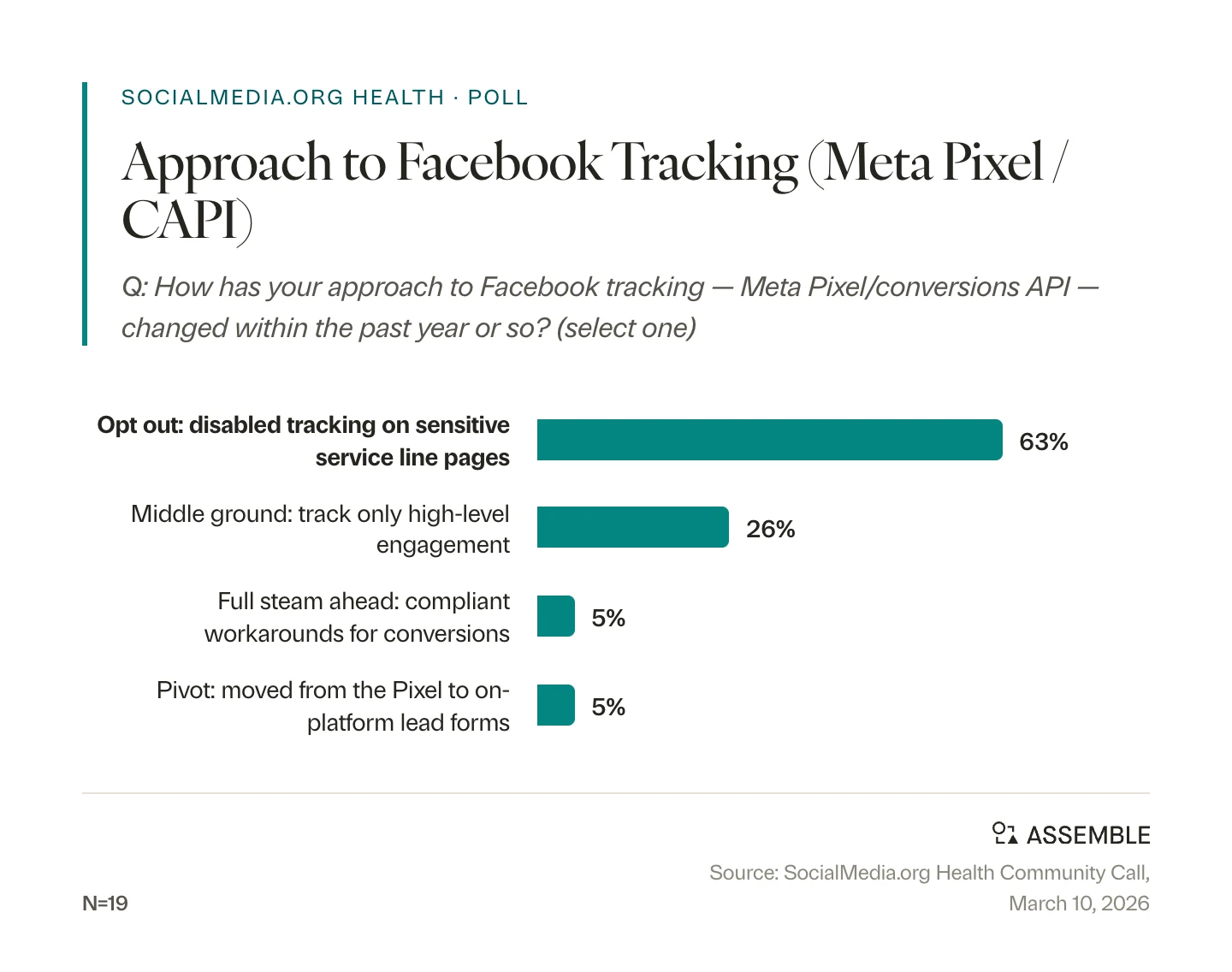
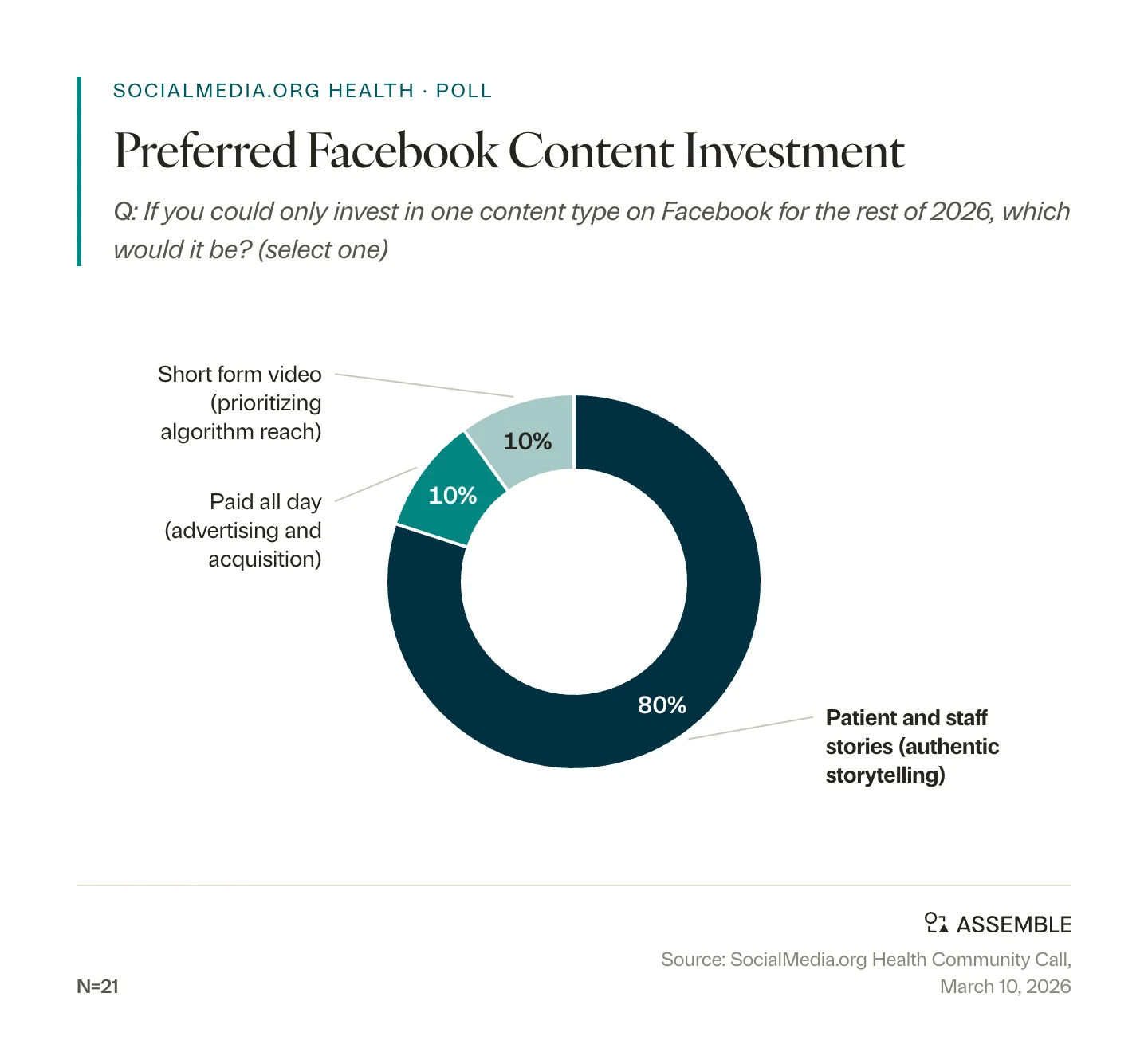
As organic reach declines and platform dynamics evolve, teams are reassessing how they use Facebook across paid, organic, and content strategies. 63% of hospitals have disabled Meta Pixel tracking on sensitive service line pages, and 80% would invest exclusively in patient and staff storytelling if limited to one content type.
“Our top content is still always patient and team member stories.”
Poll results
Focus of the Discussion
Access Doesn’t Guarantee Adoption
Most teams can no longer measure Facebook performance the way they used to.
With 63% of organizations disabling Pixel tracking, attribution is breaking down, leaving leaders without clear insight into how Facebook drives business outcomes.
In contrast, content performance is becoming more predictable, suggesting a clear path forward for organic strategy. Storytelling posts continue to outperform more traditional clinical or link-driven content, which now struggles to gain visibility. That visibility challenge is driving experimentation.
The tension is unresolved: Teams have clearer signals on what content works, but less clarity on how to measure impact or reliably distribute it.
Key Takeaways
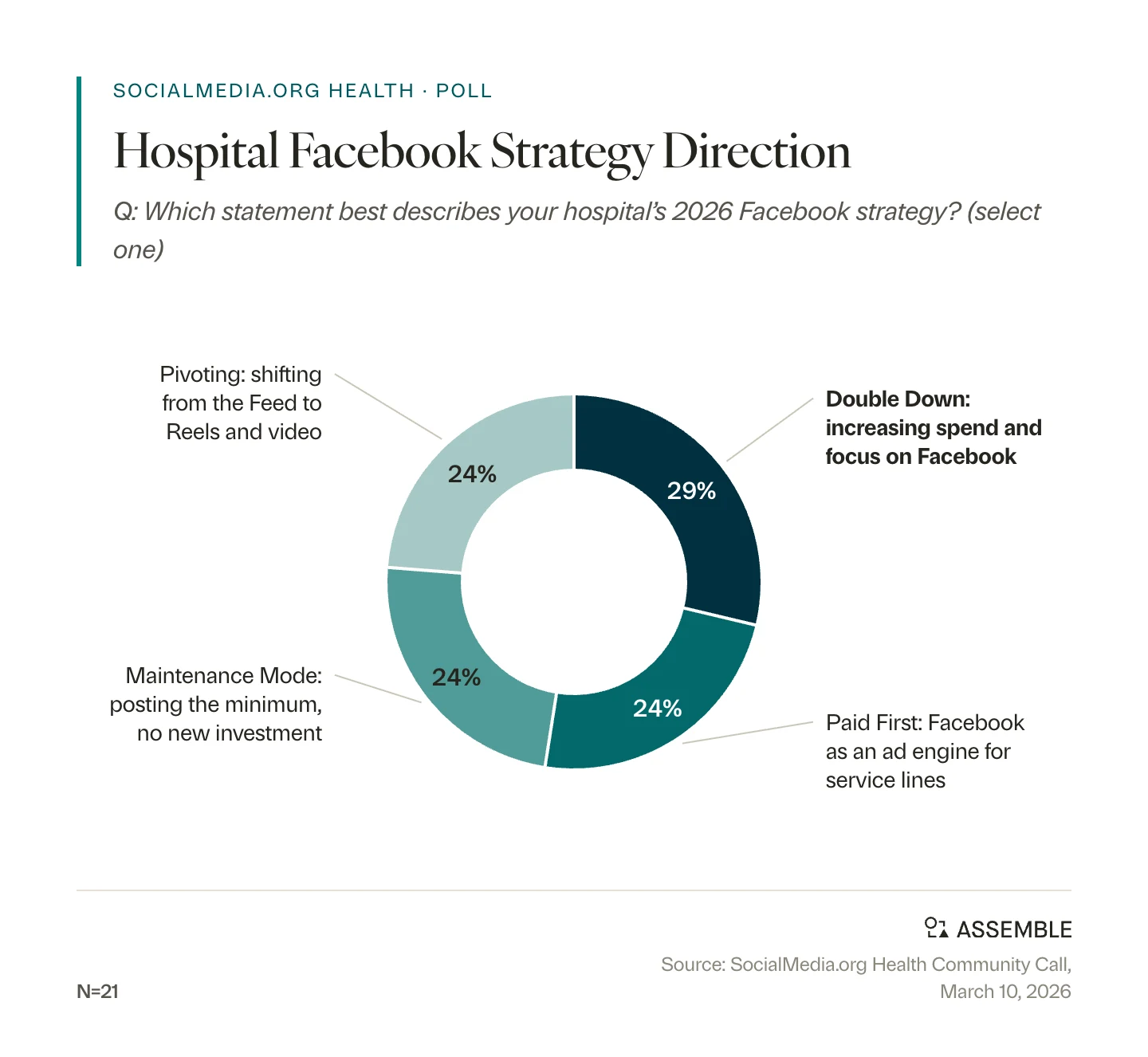
Several teams noted that, while organic distribution has tightened over time, paid placements still provide dependable reach for campaigns tied to service-line marketing. Poll results reflected a range of approaches, with some organizations increasing investment while others treat Facebook primarily as an advertising engine. Others said they maintain an organic presence, but rely more heavily on paid support when they need consistent distribution.
Many members said narrative-driven posts featuring patients or team members consistently outperform other types of content. It was noted that these stories often perform well when presented as photo galleries or native storytelling posts rather than link-driven updates.
Some teams are beginning to experiment with “zero-click” publishing, as members believe Facebook gives less distribution to posts that include external links. Several leaders described testing ways to keep more information directly within the post rather than relying on users to click through to external pages. Examples included placing links in the first comment, rewriting articles into native posts, or avoiding links entirely when possible as teams test how link placement affects distribution.
Vertical video is becoming a greater operational priority for teams, as Facebook continues shifting toward video-first formats like Reels. Some members reported that vertical videos are outperforming horizontal formats in their reporting. In response, some teams are adjusting internal production workflows so that vertical assets are included alongside traditional video packages. Others are using tagging or labeling in social management tools to track performance by video format more closely.
Moderating comments remains an ongoing operational challenge, particularly around sensitive or high-profile health topics. Leaders described how posts about public health issues can attract trolling, misinformation, or hostile comments. To manage this, teams shared a range of approaches, including keyword filters, limiting who can comment, and banning users who violate community guidelines. Several said having clear moderation policies helps teams move quickly when conversations escalate.
About SocialMedia.org Health and Assemble
SocialMedia.org Health is an Assemble community that helps senior social media leaders at the nation’s biggest hospitals make better, faster decisions through trusted peer insights.
We selectively share highlights from confidential member conversations to help leaders understand how peers are navigating complex challenges and fast-moving, high-stakes moments.
If you’d like to learn more about the conversations happening inside our peer network, or how members connect with trusted peers to solve critical challenges, please contact us.